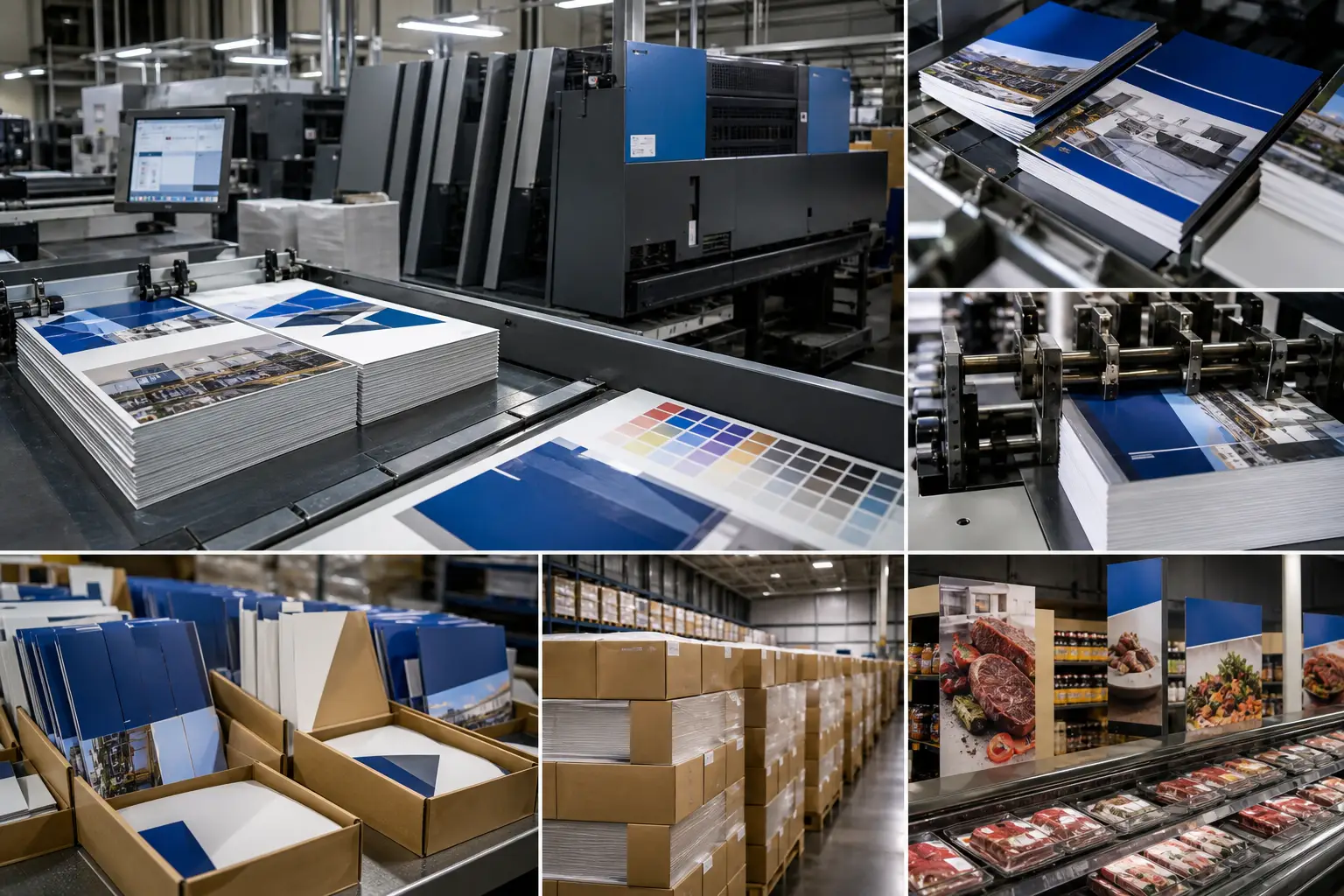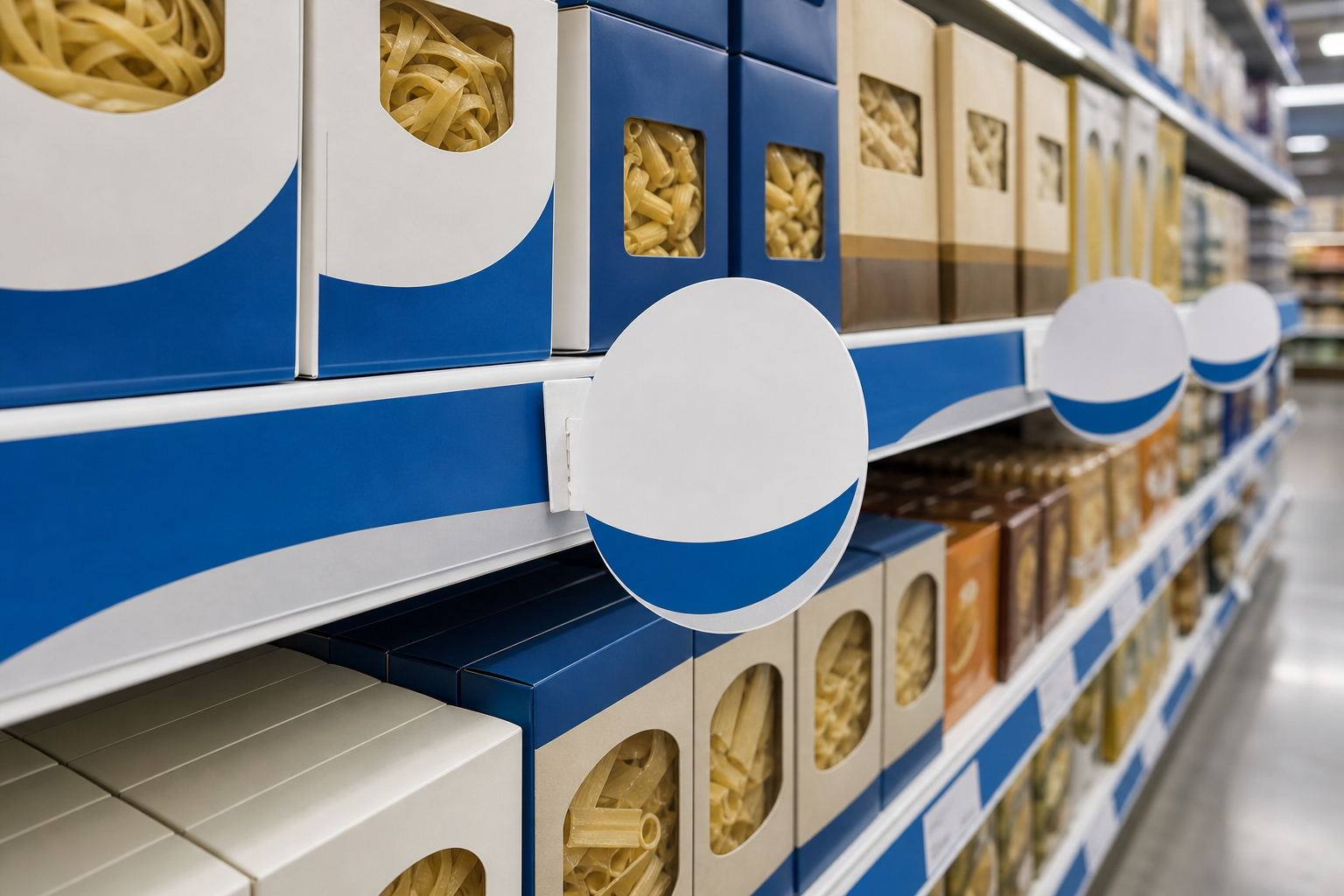
Rail strips place promotional, category, pricing, and brand messages directly at the shelf edge, where shoppers compare products and make quick decisions. For grocery retailers, the challenge is not simply printing a strip. It is planning a program that fits each fixture, reflects each store’s assortment and promotion, and arrives organized for installation.
A dependable rail-strip program begins with verified dimensions and a clear versioning plan. It should then connect prepress, print production, finishing, kitting, and distribution into one controlled workflow. That approach helps merchandising, marketing, and store operations teams execute recurring promotions with fewer avoidable mismatches.
What are rail strips in grocery merchandising?
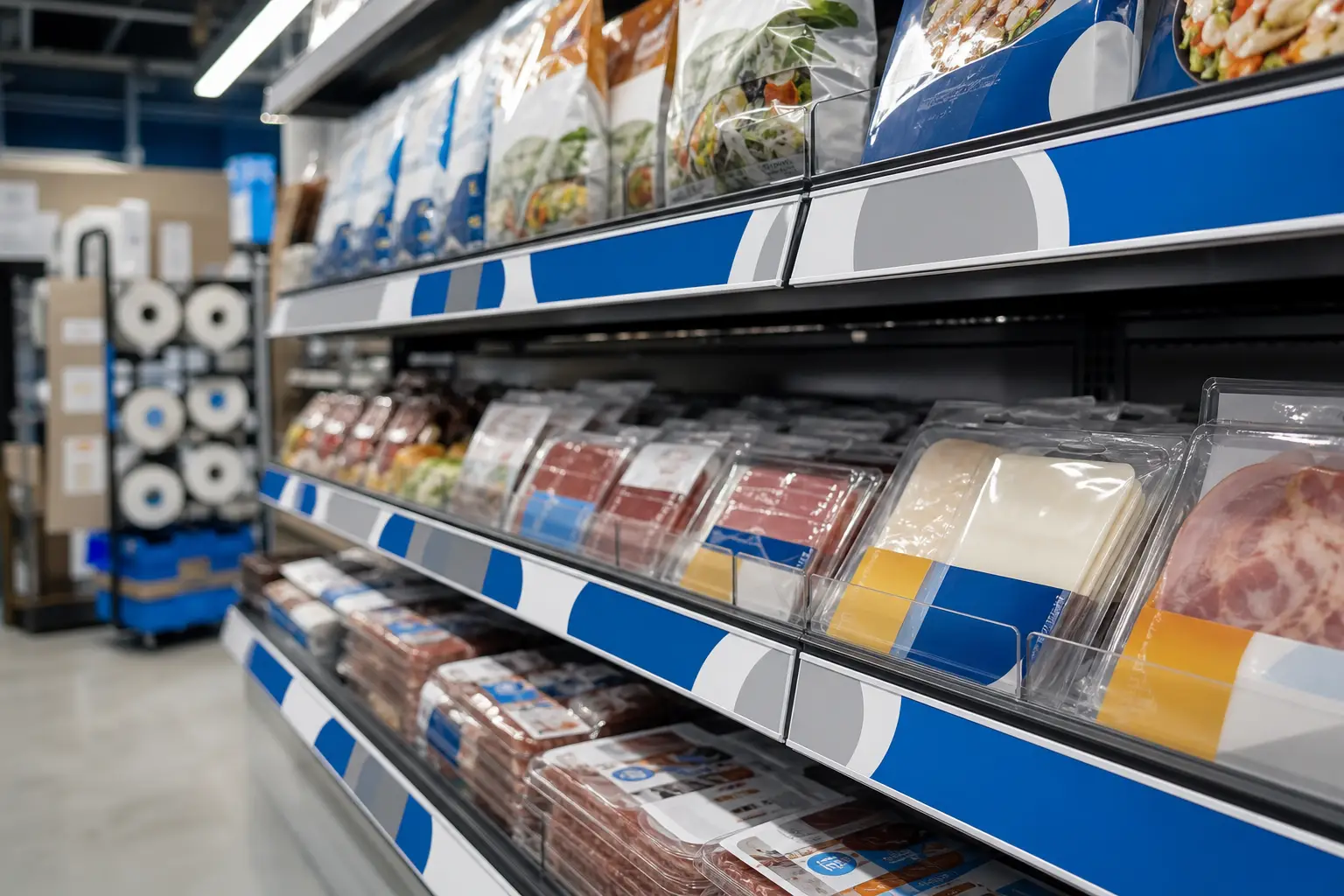
Rail strips are long, narrow printed pieces designed for placement along a shelf rail or shelf edge. They can support sale events, private-label visibility, category navigation, seasonal campaigns, product attributes, or department messaging. Depending on the fixture and installation method, a strip may slide into a holder, mount to a rail, or use another specified attachment system.
They work best as part of a larger shelf-level merchandising system. Shelf talkers, aisle signage, display components, and refrigerated materials may carry the same promotion beyond the shelf edge. Print Group Inc. produces grocery shelf and in-store marketing materials for coordinated retail applications.
Because shelf edges vary by department, fixture, and store, a rail strip is a production component with fit requirements. A strong graphic cannot overcome the wrong finished size, an unsuitable substrate, or an unplanned installation method.
Plan rail strips around the store environment
Before artwork moves into production, gather the operating details that determine how the finished pieces will perform. This step is especially important for chains with different store formats, remodel cycles, and department layouts.
Confirm fixture and placement specifications
Start with the usable rail height and the length of each planned section. Identify whether the piece needs to fit a clear holder, a label rail, or another fixture configuration. Note obstructions, shelf breaks, corners, endcaps, and locations where a single continuous strip will not work.
Request representative photos and measurements from the field when possible. A documented fixture matrix gives prepress and production teams a reference for each approved format. It also reduces the risk of producing a standard size that does not fit a meaningful portion of the store base.
Match materials and finishing to the department
A dry grocery aisle, produce department, and refrigerated perimeter do not present the same conditions. Handling, moisture, temperature changes, cleaning routines, lighting, and replacement frequency should influence material selection and finishing decisions.
For messaging placed in or near refrigerated displays, teams should separately evaluate the application environment. Explore cold case materials for grocery merchandising when a promotion requires materials intended for demanding refrigerated conditions.
Finishing also affects installation. Clean trimming, consistent final dimensions, and an organized pack sequence help stores place materials without unnecessary cutting or sorting.
Design for shelf-level reading
Shelf-edge messaging has limited space and a short viewing window. Lead with one clear idea: the promotion, product group, brand cue, or category direction. Keep the message hierarchy direct, and ensure required copy is reviewed by the retailer before production.
Designers should account for the visible area after installation. Fixture lips, holders, and adjacent tags can conceal portions of the printed piece. Production-ready artwork should include the correct trim, bleed, safe area, color specifications, and version identifier.
Build a store-specific rail strips version plan
Most grocery promotions require more than one version. Store-specific rail strips may vary because of assortment, local pricing direction, language needs, department layout, promotional dates, private-label participation, or fixture dimensions. Treating every version as a separate, named production item improves control.
A practical version plan typically includes:
- Program ID: A clear name for the campaign or promotion period.
- Store or format ID: The destination store, store group, or fixture format assigned to each version.
- Department and bay location: The intended placement, such as grocery, meat, dairy, frozen, or produce.
- Finished size and quantity: The approved dimensions and piece count for each location.
- Artwork version: A controlled file name and revision status.
- Pack instruction: The bundle, carton, or kit in which each item will ship.
Use a single source of truth for these fields before release to production. Merchandising teams can then confirm that the plan reflects the current promotional calendar. Production teams can use the same data to manage versions, quantities, and fulfillment.
Variable information does not always require a separate manual workflow for every item. Where a project includes controlled versioned content, digital and variable-data printing can support customized print production. The appropriate production method depends on quantity, number of versions, color requirements, finished format, and campaign timing.
Prevent common shelf-edge execution problems
Many rail-strip problems begin upstream. The following checks can protect the program before materials reach stores.
- Do not assume every rail is the same. Confirm dimensions by fixture family and store format.
- Separate content changes from layout changes. A new price message and a new strip length create different production considerations.
- Use unambiguous file names. Include campaign, department, store group, size, and revision where practical.
- Review color-critical elements early. Brand colors, product photography, and promotional color blocks require a defined approval process.
- Plan replacement quantities. Store teams may need extra pieces for damage, resets, or misplaced materials.
- Provide installation guidance. A concise pack list and placement instructions can reduce store-level uncertainty.
For meat departments, shelf-edge and perimeter messaging must also work alongside the department’s specialized merchandising needs. See Print Group Inc.’s meat department merchandising solutions for related in-department applications.
Kitting and distribution are part of the promotion
Printing is only one stage of a multi-store rollout. If stores receive mixed versions, incomplete sets, or cartons with unclear identification, the program becomes harder to install correctly. Distribution planning should therefore begin while the production plan is still being finalized.
Define the shipping unit first. A kit may serve one store, one department, one promotional event, or one fixture reset. Each kit should contain the correct rail strips, supporting materials, instructions, and identification for its destination. Carton labels and packing documentation should align with the retailer’s receiving process.
Sequencing matters as well. Organize strips by department, aisle, bay, or installation order when that structure helps store teams work more efficiently. Keep versions physically separated so one store’s materials do not travel to another location by mistake.
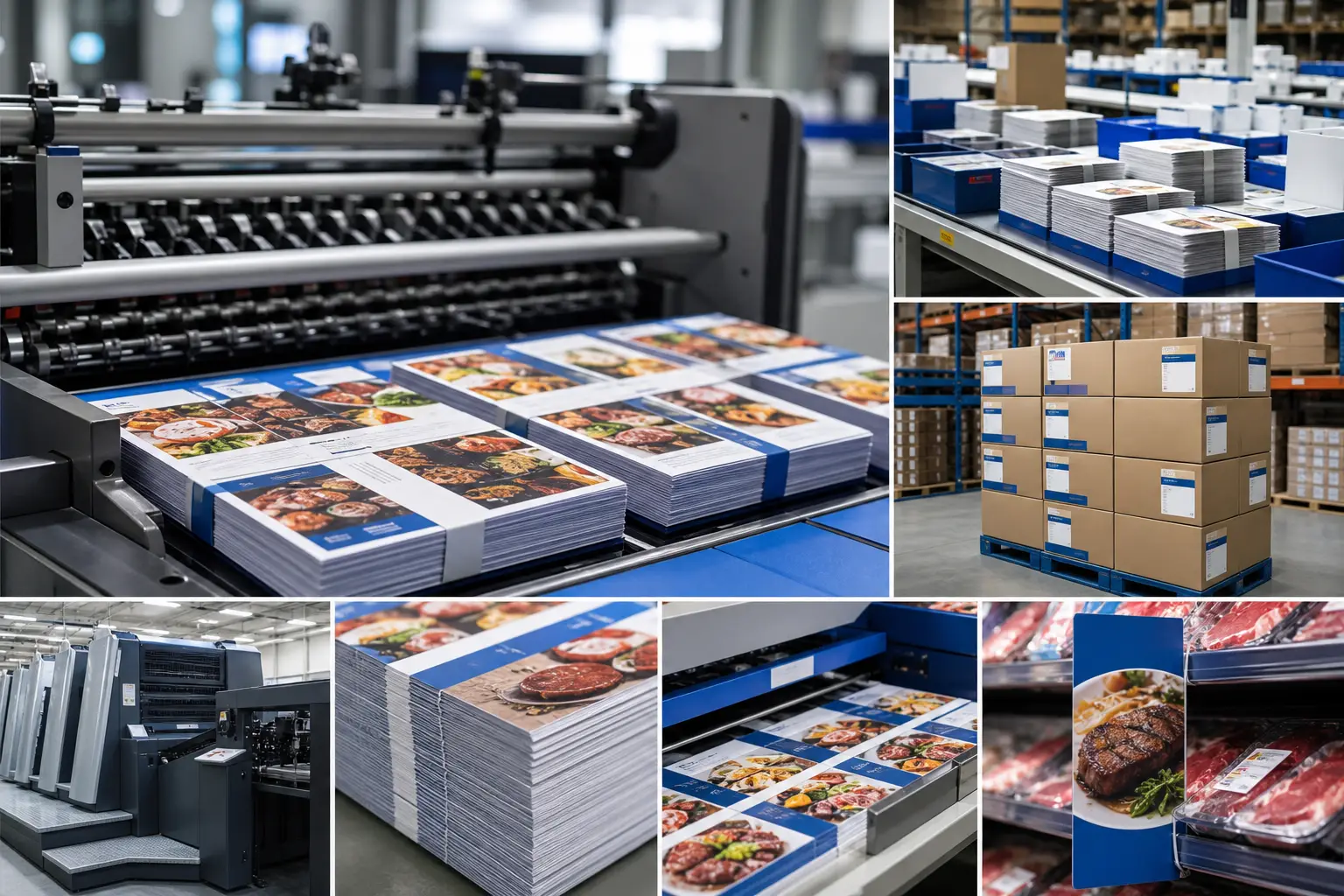
Print Group Inc. offers kitting and distribution services for multi-location programs, bringing printed materials, assembly, and delivery coordination into a single production workflow.
A practical rail-strip project checklist
- Promotion dates, departments, and campaign objectives
- Verified fixture dimensions and installation method
- Approved material and finishing requirements
- Artwork files with version control and final approval status
- Store-level quantities, replacement quantities, and destination data
- Kit contents, pack sequence, carton identification, and shipping schedule
- Store instructions for placement and removal
Rail strips are most effective when the shelf-edge message, production specification, and store-delivery plan all match. Print Group Inc. can review project specifications for grocery promotions that require repeatable print production, kitting, and multi-location distribution. Request a customized quote based on your sizes, quantities, versions, finishing requirements, and timeline.