Cold-case signage must do more than attract attention. In refrigerated grocery environments, it must stay legible and organized despite low temperatures, airflow, condensation, routine cleaning, bright case lighting, and frequent product rotation. The right materials, construction, artwork, and distribution plan help grocery teams maintain a consistent presentation at the case.
For retailers, meat departments, and food brands, in-case signage is an operational merchandising component. It can identify sections, distinguish product groups, support promotions, and reinforce brand presentation where shoppers make quick comparisons. A successful program begins by matching each piece to its exact placement and working conditions.
Why refrigerated cases are demanding merchandising environments
Standard paper-based signage is not automatically suited to an environment with moisture and changing temperatures. Condensation can affect edges and surfaces. Air movement can shift lightweight pieces. Cleaning routines can create additional wear. Meanwhile, high-visibility lighting makes faded color, curled corners, and damaged graphics more noticeable.
These conditions affect materials placed inside the case as well as pieces installed near its perimeter. Before requesting production, define where each item will sit, how it will be attached, who will handle it, and how often it will be changed. Those details guide practical decisions about substrate, thickness, finishing, and quantity.
Print Group Inc. produces cold case materials for refrigerated retail environments, where material performance and repeatable execution need to work together.
Cold-case signage starts with the placement
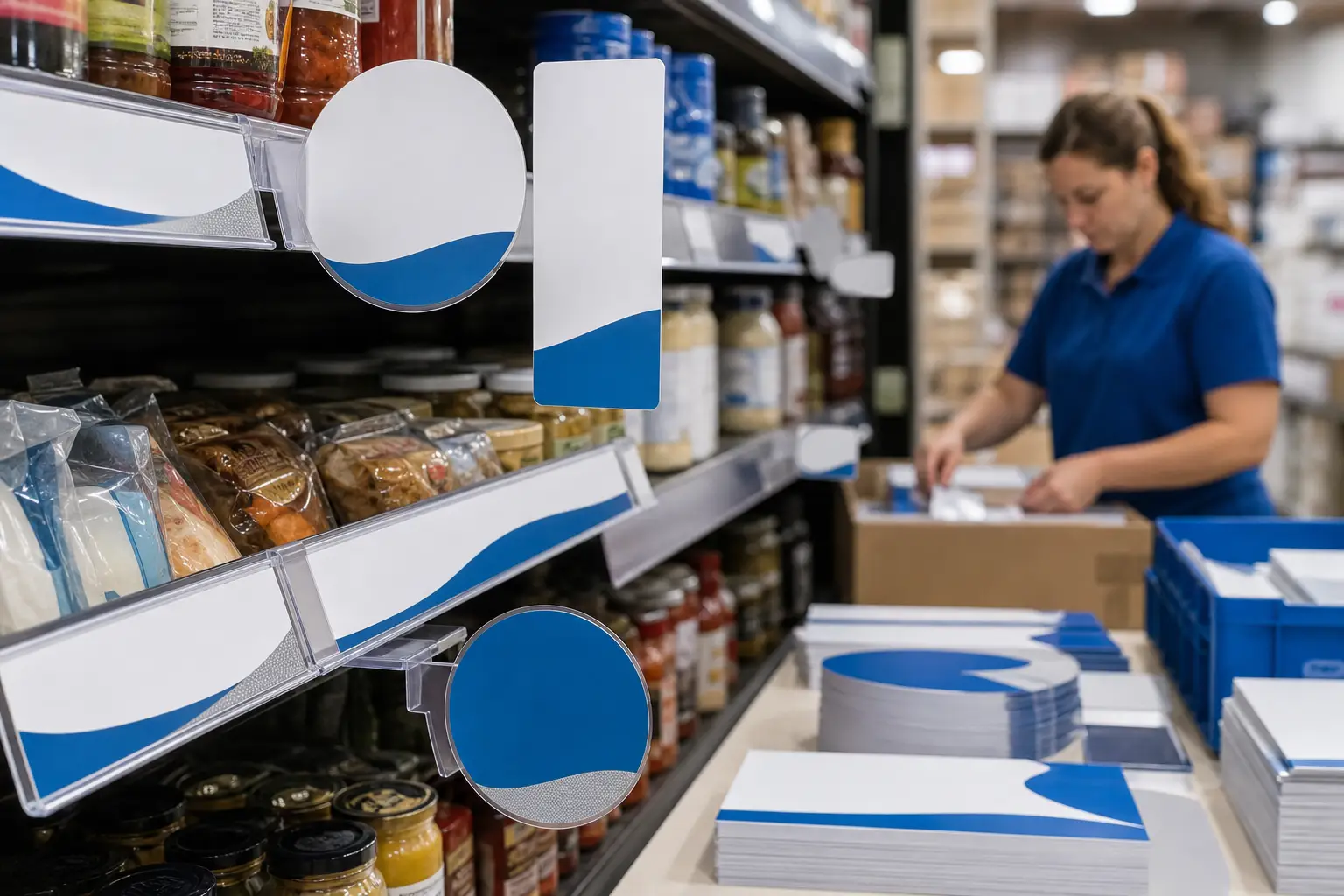
“Cold case” describes an environment, not one sign format. Different placements create different production needs. A sign that fits a case rail may need a different construction than a divider, hanging component, shelf strip, or perimeter graphic.
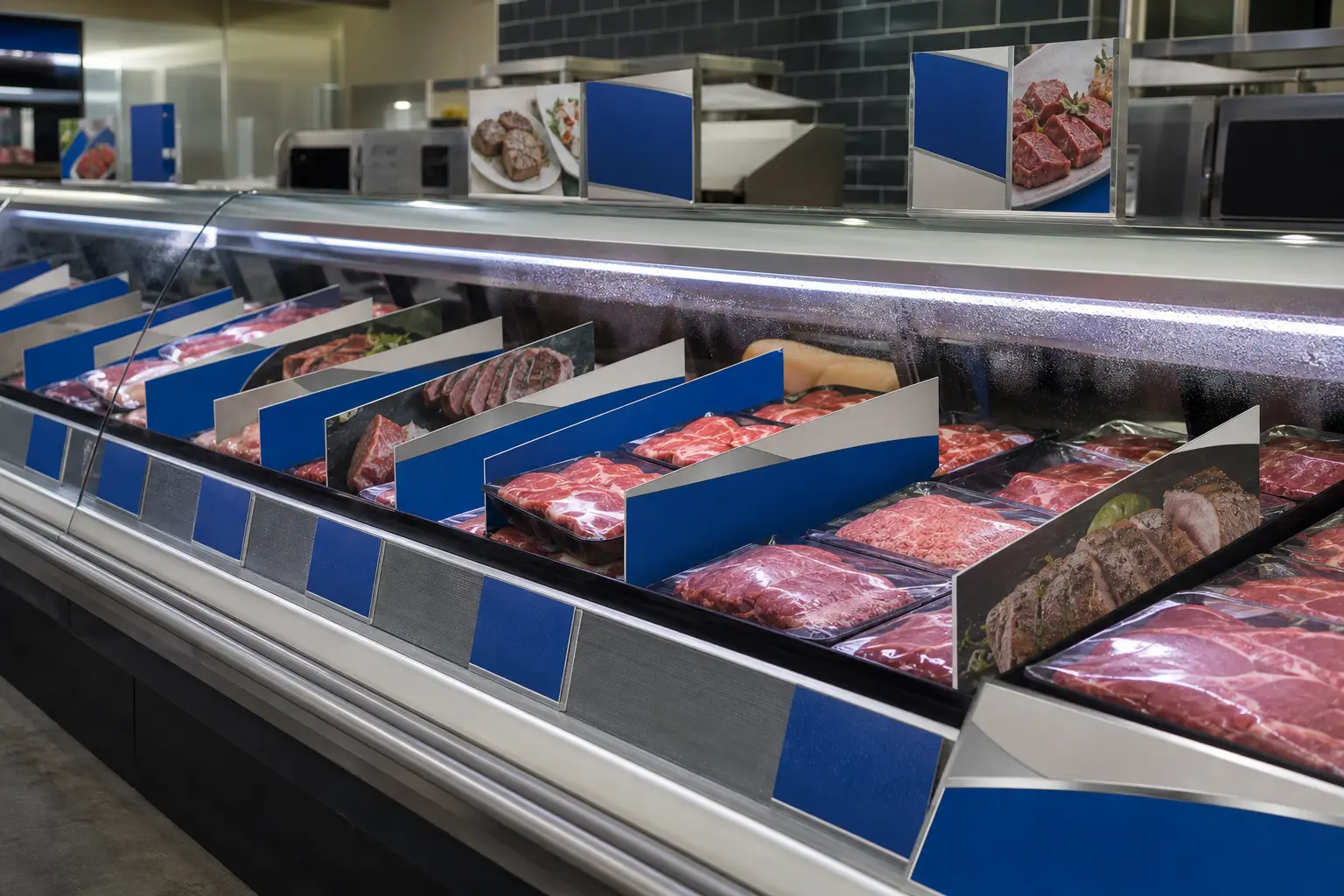
Common applications inside and around the case
- Case dividers: Separate products, cuts, brands, or programs while helping teams maintain a defined display structure.
- Product and category identifiers: Help shoppers recognize the assortment or navigate a refrigerated display.
- Promotional inserts: Call attention to a limited campaign, featured product, or seasonal program.
- Shelf strips and rail inserts: Deliver concise information at the product level where compatible with the fixture.
- Case-front and perimeter graphics: Support broader department presentation outside the refrigerated interior.
Start with measurements from the actual fixture rather than relying on a general case description. Record insertion depth, usable width, clearance points, attachment method, and any locations that interfere with doors, lighting, product loading, or cleaning. A production-ready specification reduces fit issues across stores and case types.
For systems that also organize the display, review custom meat case dividers as part of the broader merchandising plan. Dividers and signage can share visual standards while serving distinct functions.
Specify materials for the actual environment
Material selection should follow function rather than appearance alone. A rigid component may suit a long-term divider or structural display element. A flexible piece may better suit a replaceable insert or a fixture-specific application. Finishing decisions can also affect handling, edge durability, surface appearance, and cleaning exposure.
Discuss these conditions during planning:
- Temperature range and the expected presence of condensation
- Whether the piece sits inside the case or outside it
- Cleaning methods and handling frequency
- Required stiffness, thickness, and edge profile
- Mounting or insertion method
- Expected campaign duration and replacement schedule
- Store-level installation requirements
It is also useful to separate permanent department components from short-term promotional materials. Long-running category identification often benefits from a durable, repeatable system. Promotions may require versioned graphics and planned replenishment instead. Treating both applications as the same product can create unnecessary complexity or waste.
Build artwork for fast recognition at the case
Cold-case signage has limited time to communicate. Shoppers often view it while comparing packages, navigating doors, or moving through a busy department. The message should be simple enough to scan quickly from the intended viewing distance.
Design choices that support production and in-store use
- Use clear hierarchy so the primary message appears first.
- Set type at a size appropriate for the placement and viewing distance.
- Maintain contrast between text, graphics, and the surrounding product display.
- Reserve adequate margins around trim lines, slots, folds, and attachment areas.
- Use approved brand colors and provide production-ready artwork.
- Plan versions carefully when departments, stores, regions, or product categories differ.
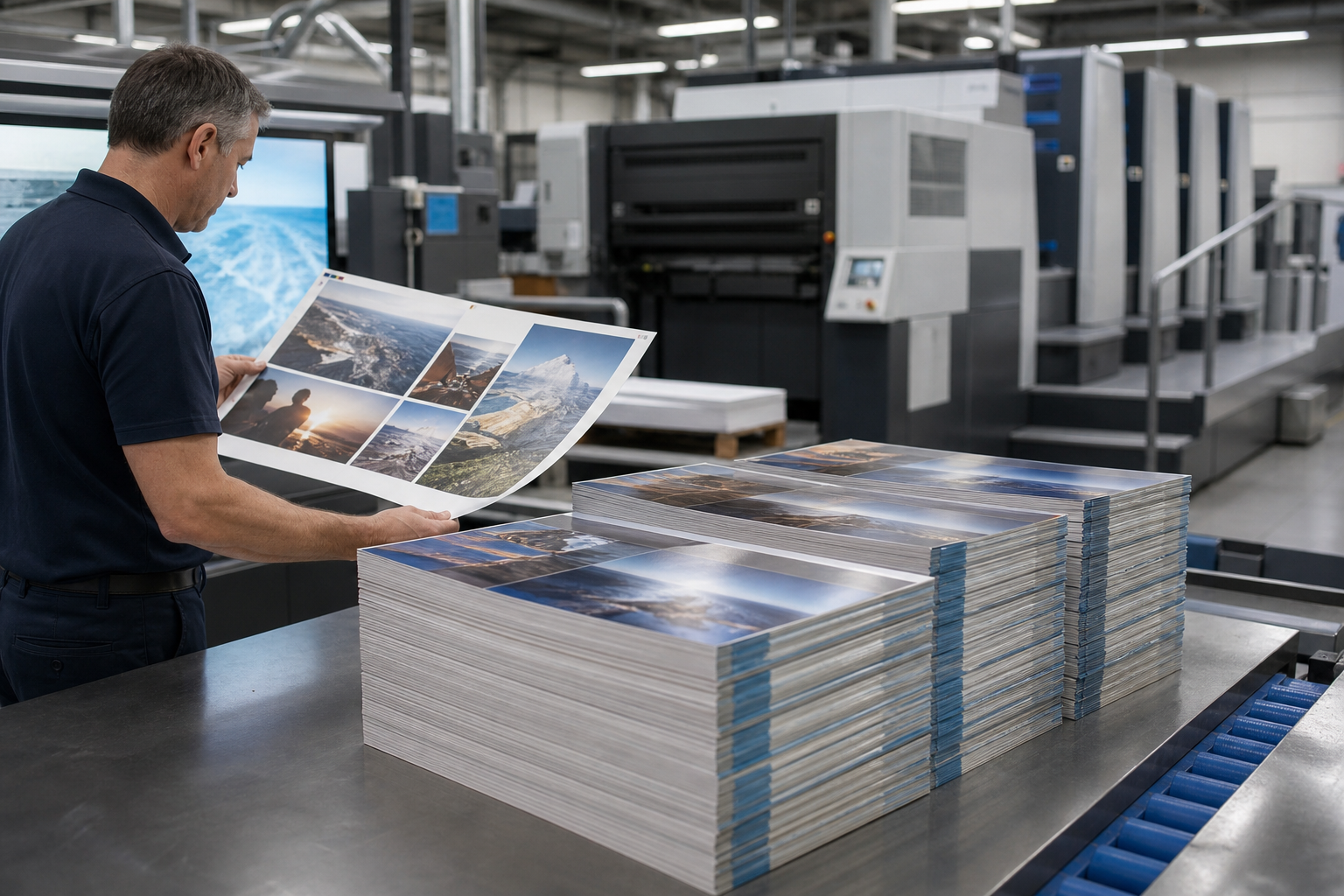
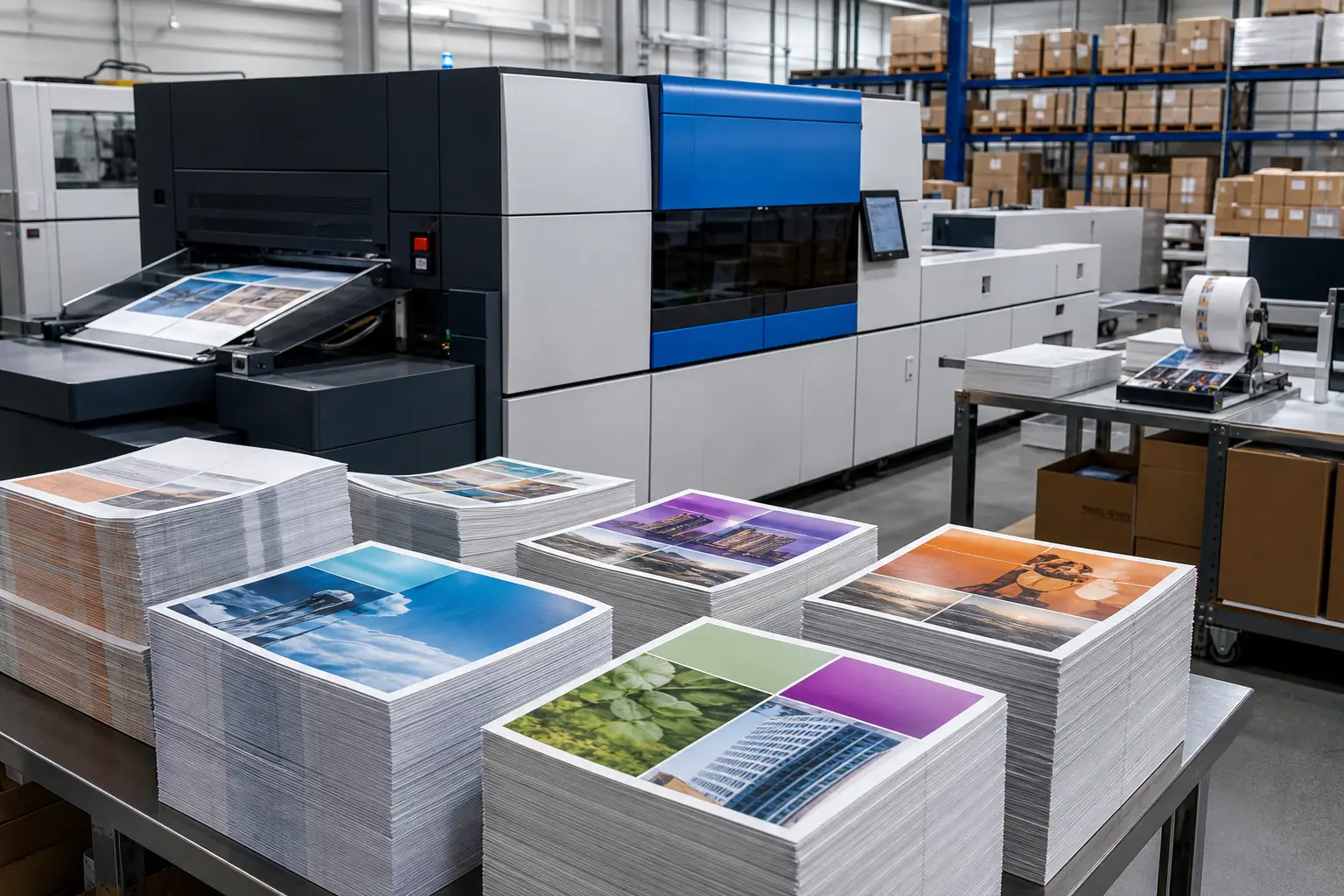
A proofing process should account for the final size, material, finishing, and placement. Artwork that looks balanced on a monitor can behave differently when produced at case scale or placed against varied package colors. Prepress review helps identify small type, insufficient contrast, trim concerns, and version-control issues before production begins.
Coordinate point-of-sale materials as a system
In-case pieces perform best when they support, rather than compete with, other merchandising elements. A shopper may see a department header, a case-front message, a shelf-level promotion, and package labels within seconds. Each component should have a defined role.
For example, a case-front graphic can establish a category or campaign. A divider can organize the assortment. A smaller insert can direct attention to a specific product group. Package labels then provide product-level information. Coordinating hierarchy across those touchpoints makes the department easier to navigate.
Meat departments often require particularly disciplined systems because assortments move quickly and presentations change often. Meat department point-of-sale printing can include the in-department materials needed to support promotions and shopper decisions in a cold, high-traffic setting.
Plan quantities, versions, and store kits before production
Multi-location programs introduce a second challenge: every store may not need the same materials. Case configurations, department footprints, regional campaigns, language needs, and product assortments can affect quantities and versions. A single undifferentiated shipment can leave stores sorting through materials they cannot use.
Create a deployment plan before the press schedule is finalized. The plan should identify:
- Store groups and fixture variations
- Item quantities by store or department
- Artwork versions and approval ownership
- Kit contents and packing sequence
- Installation instructions, if needed
- Delivery locations and required arrival windows
- Reserve inventory for replacements or later rollouts
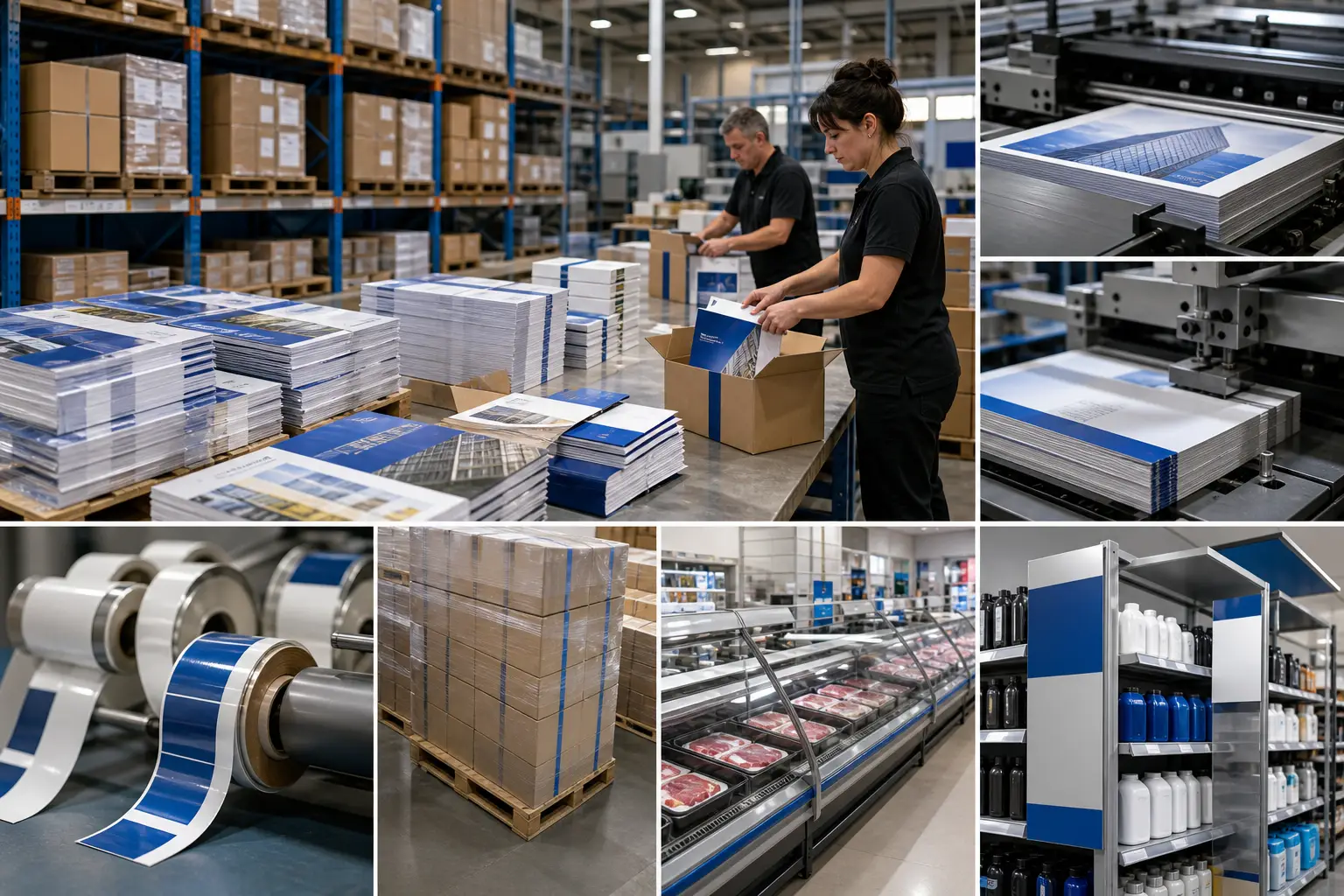
Kitting can group compatible components by campaign, store, or department so field teams receive a more usable package. Print Group Inc. supports kitting and multi-location distribution for programs that require organized assembly and national shipping.
A practical cold-case signage checklist
Use this checklist before approving a refrigerated merchandising project:
- Confirm the exact fixture dimensions and placement location.
- Define whether the item is permanent, seasonal, or promotional.
- Document moisture, cold, cleaning, and handling exposure.
- Choose the material and finishing approach based on those conditions.
- Provide approved, production-ready artwork with clear version naming.
- Review proofs for color, legibility, trim, and construction details.
- Map quantities and kits to stores before final production.
- Plan fulfillment, delivery, and replacement inventory.
Well-planned cold-case signage helps retailers bring durability, visual consistency, and operational control to one of the store’s most demanding display areas. Print Group Inc. can review materials, production requirements, quantities, finishing, and distribution needs for refrigerated grocery merchandising programs. Request a customized quote to begin defining the project.