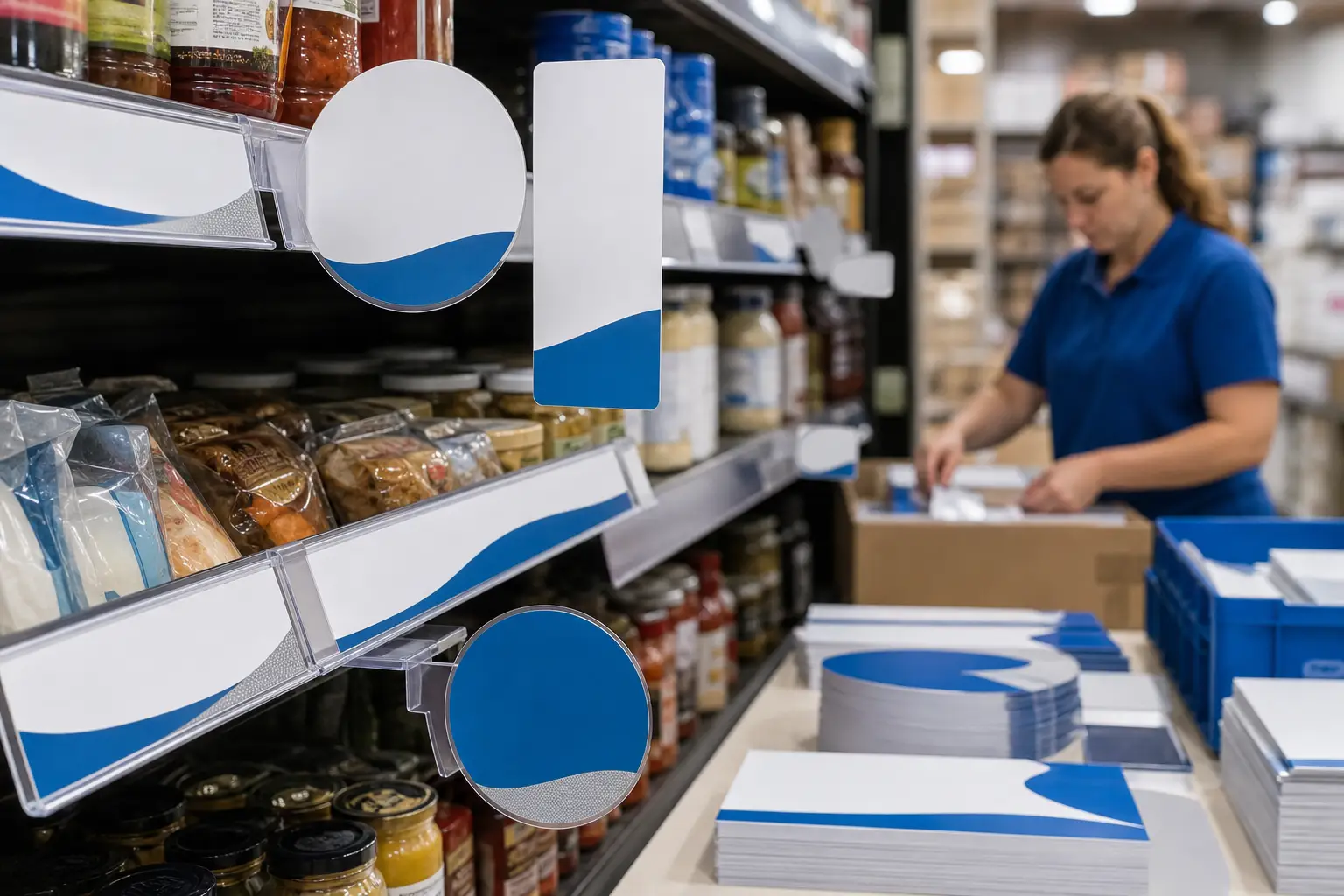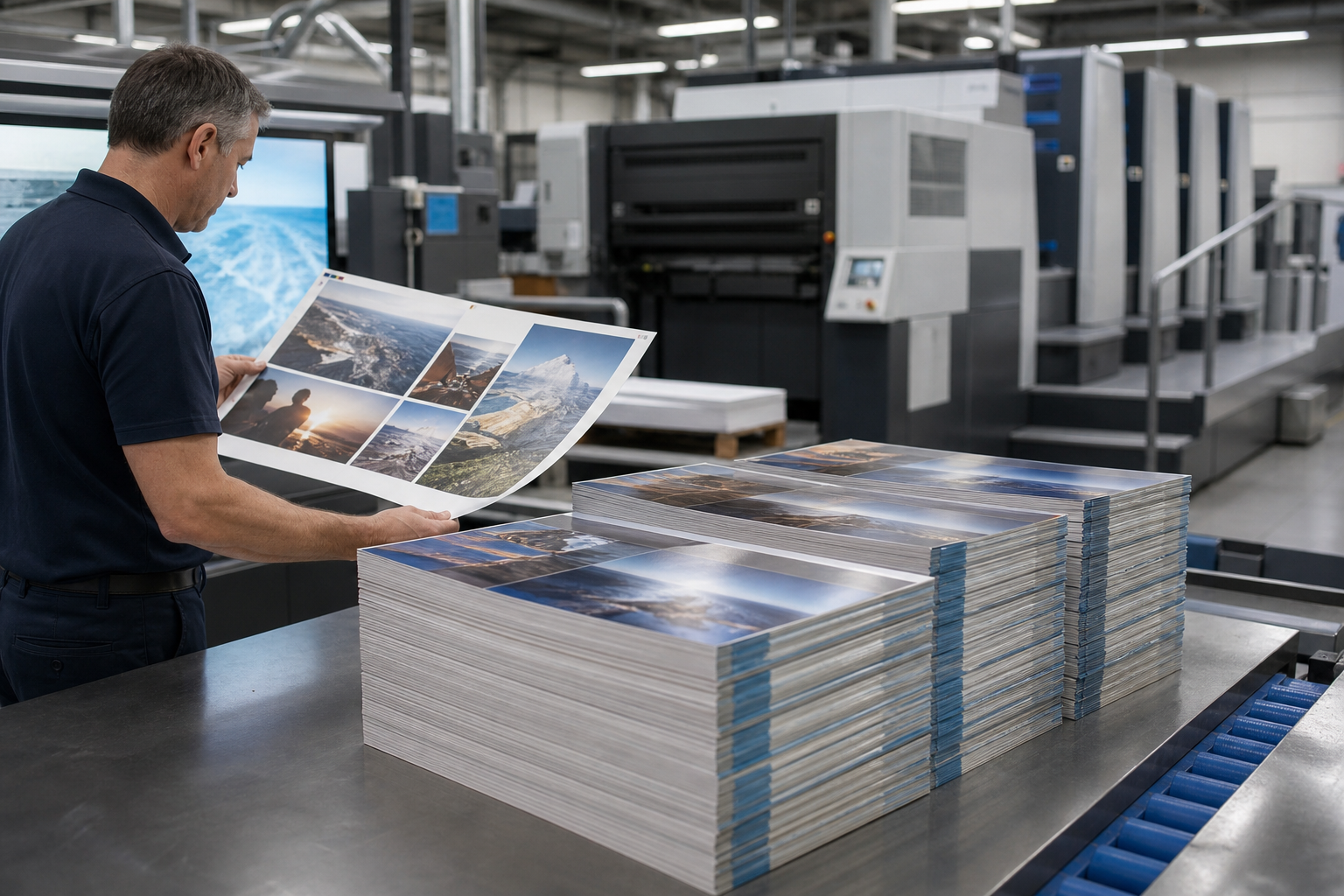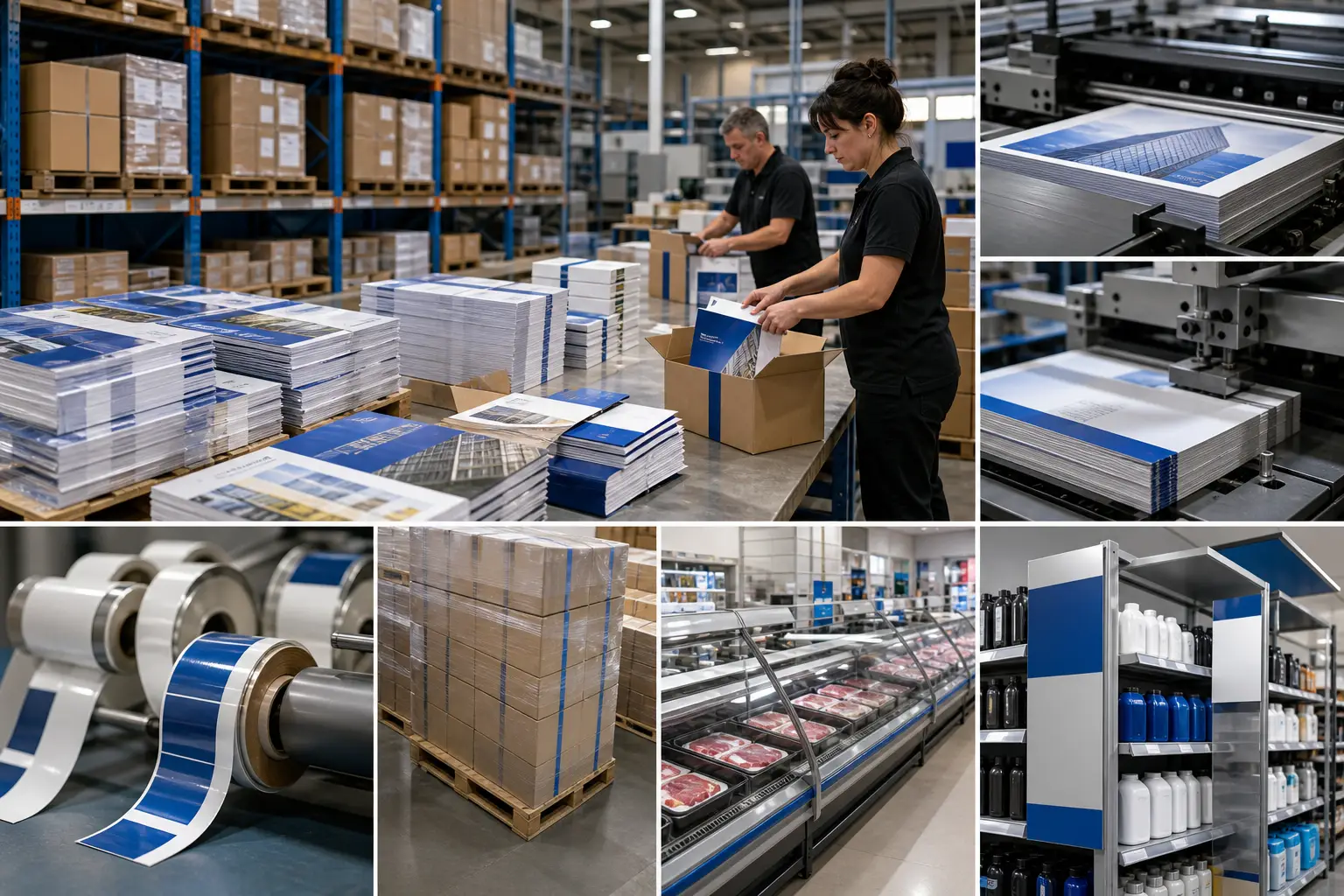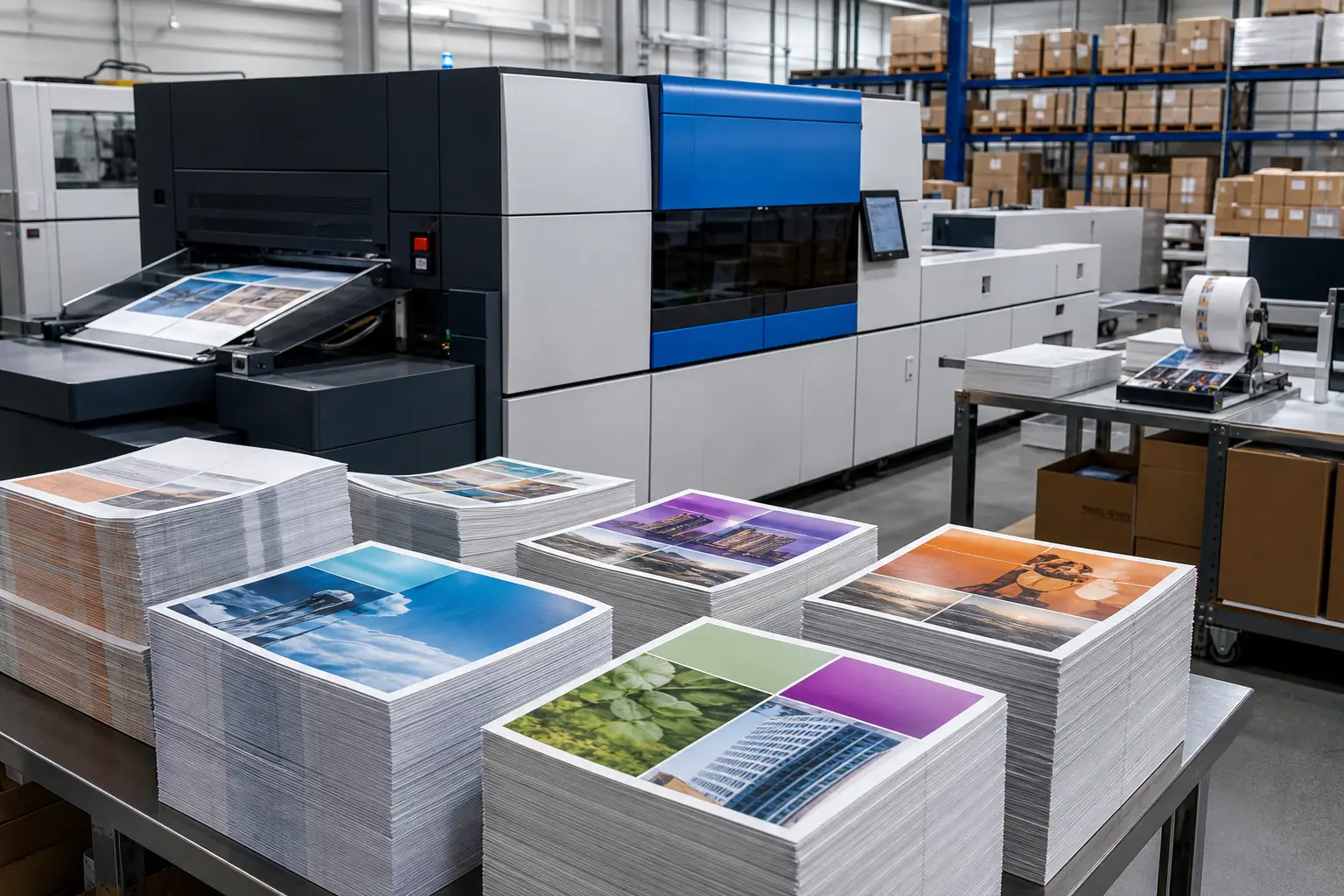
Production-ready label artwork is artwork that has been reviewed against the realities of the finished label: how it will print, apply, scan, survive handling, and differ across versions. Before a label reaches press, the file should account for barcode placement and quality, approved copy, color targets, substrate and adhesive choices, finishing, roll requirements, and version control.
This preparation reduces avoidable production questions and helps teams protect consistency across recurring labels, private-label programs, regional variants, and high-volume roll-label orders. A visually complete design is not necessarily ready for production. The production file must communicate the specifications that turn approved artwork into a repeatable physical product.
What production-ready label artwork needs to resolve
A label project often involves several teams. Brand and marketing teams manage appearance. Operations teams manage application and product flow. Packaging, procurement, and production teams manage materials, quantities, and timing. When their requirements remain separate, important details can be missed until late in the process.
Production-ready label artwork consolidates those decisions into a controlled release package. It gives prepress a clear basis for review and gives the production team a defined standard to follow.
- Artwork: final approved graphics, copy, fonts, images, and dielines.
- Functional elements: barcodes, variable fields, warning or handling content, and other required identifiers.
- Print expectations: color references, ink approach, finishes, and tolerance-sensitive details.
- Material requirements: facestock, adhesive, liner, and expected storage or handling conditions.
- Application requirements: roll direction, core, label dimensions, gap, and dispensing or application method.
- Version controls: a master file, version naming, approval status, and a record of what differs between SKUs or markets.
These details matter for both short runs and larger programs. For high-volume work, they also support the repeatability expected from flexographic label printing.
Manage barcodes as production elements, not artwork details
A barcode can be present in a file and still create risk if it is poorly placed, altered during export, or printed on an unsuitable surface. Treat the barcode as a functional production element with its own review path.
Start with the barcode data. Confirm that the intended number or encoded information matches the approved product record. Then preserve the barcode’s proportions and quiet areas in the artwork. Avoid crowding it with borders, copy, images, varnish effects, or design elements that may interfere with scanning.
Placement also affects performance. A barcode should sit on an area of the label that remains flat and visible after application. Curved containers, seams, folds, textured packages, and reflective surfaces can all affect practical scanning conditions. Barcode location must therefore be considered with the container and application method, not only on a flat screen proof.
Color and contrast require equal attention. Do not assume a barcode will scan because it looks dark on a monitor. The selected ink, substrate, finish, print method, and press conditions influence the printed result. When barcode performance is operationally important, establish the acceptance process with the relevant retailer, distributor, application partner, or internal quality team before release. A production partner can then review the file with those requirements in mind.
Control label versions before production starts
Versioned labels are common in grocery, food processing, manufacturing, distribution, and private-label programs. A shared design may require different product names, flavors, sizes, languages, regional copy, plant identifiers, customer information, or promotional elements. The challenge is not creating the variations. The challenge is preventing the wrong variation from being produced or shipped.
Build a version matrix before final file release. The matrix should identify every version, its SKU or internal reference, the approved copy source, quantity, material differences, and destination if the labels will be kitted or distributed. It should also identify which elements are locked across all versions and which elements may change.
Use a clear versioning convention
File names should make each version identifiable without opening the artwork. Avoid names such as “final,” “final-new,” or “approved2.” Instead, use a structured convention that includes the product or program name, SKU or version code, revision, and date where appropriate.
For example, a controlled name might distinguish a 16-ounce product label from a 32-ounce version without relying on informal email notes. Maintain one approved source file for each released version. If a correction is needed, retire the prior file from the production set and document the revision.
Organizations running broader promotions can apply the same discipline to versioned campaign printing, where regional messaging, product lines, and audiences may change within one coordinated program.
Define color expectations for the actual label material
Color approval begins with the intended label construction. White paper, clear film, metallic material, textured stocks, and colored substrates do not present ink in the same way. A transparent label may also show the package color beneath it. Design approval on one material does not automatically establish expectations for another.
Provide the production team with the approved brand color references and identify which colors are most critical. Brand marks, product-family colors, and color-coded variant bands often deserve special attention. For recurring programs, keep approved references and prior production samples organized so later orders can be evaluated against the established standard.
Small details also deserve prepress review. Fine type, reversed copy, thin rules, knockout elements, and small color type can change in appearance depending on the press process, material, and finish. Review them at the intended size. If a label includes metallic, fluorescent, opaque white, or other special effects, define the intended result before production planning is complete.
Disciplined color planning supports consistency across recurring work. The same approach applies beyond labels, as explained in this guide to maintaining color consistency across recurring issues.
Specify the label construction and press details
Artwork alone does not describe a complete label. The production specification should state the label’s physical requirements and how it moves through the customer’s operation.
- Finished size and shape: Include the approved dieline and identify any corners, cutouts, or unusual shapes.
- Facestock and adhesive: Select materials based on the product surface, application conditions, handling, and storage environment.
- Finish: Identify whether the label needs a specific varnish, laminate, or other protective or visual treatment.
- Roll configuration: State the unwind direction, core requirements, maximum roll dimensions, and quantity per roll when relevant to application equipment.
- Print method and quantities: Share expected order volume, repeat frequency, and version count early. These factors influence the production approach.
- Packaging and delivery: Define how rolls should be packed, labeled, separated, and routed to receiving locations.
For labels exposed to refrigeration, freezing, moisture, or condensation, material and adhesive decisions should be made early. Artwork review is more reliable when it is paired with the real-world conditions addressed by cold storage and freezer label planning.
A practical prepress release checklist
Before sending production-ready label artwork to press, confirm the following:
- The file matches the approved dieline and finished dimensions.
- All copy, product identifiers, and version-specific elements are approved.
- Barcodes use the approved data, location, and protected space.
- Fonts, images, linked assets, and graphic elements are included or properly embedded.
- Color references and critical color expectations are identified.
- Material, adhesive, finish, and roll configuration are documented.
- Quantities are assigned to the correct versions and destinations.
- The latest approved files are clearly separated from obsolete revisions.
- Proof and approval responsibilities are defined before production release.
Print Group Inc. supports production-driven label and packaging work with in-house prepress, label production, finishing, and coordinated distribution. For a new label program or a recurring set of versions, request a quote with the artwork, quantities, material requirements, and application details available. Early production review helps identify questions while changes are still manageable.