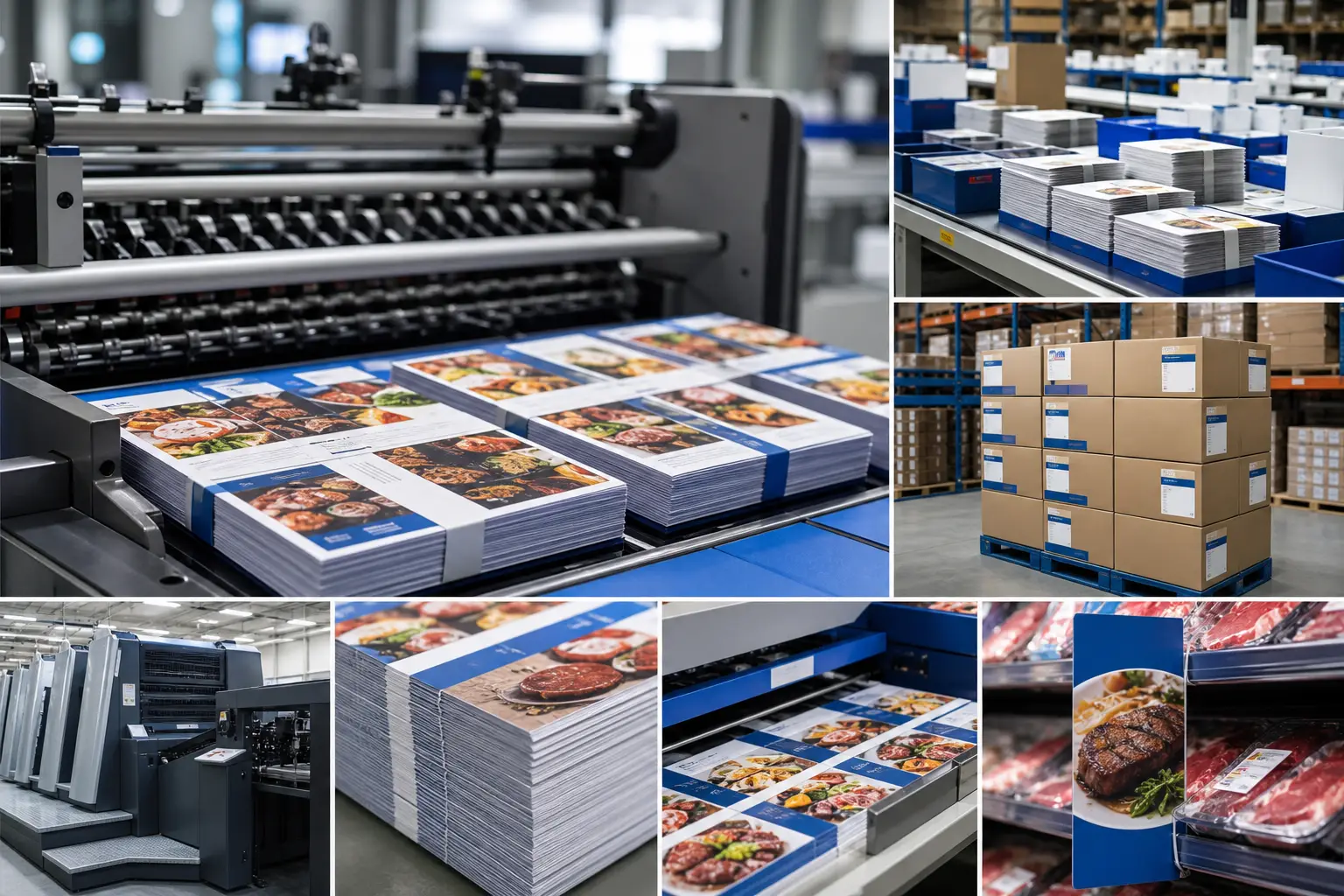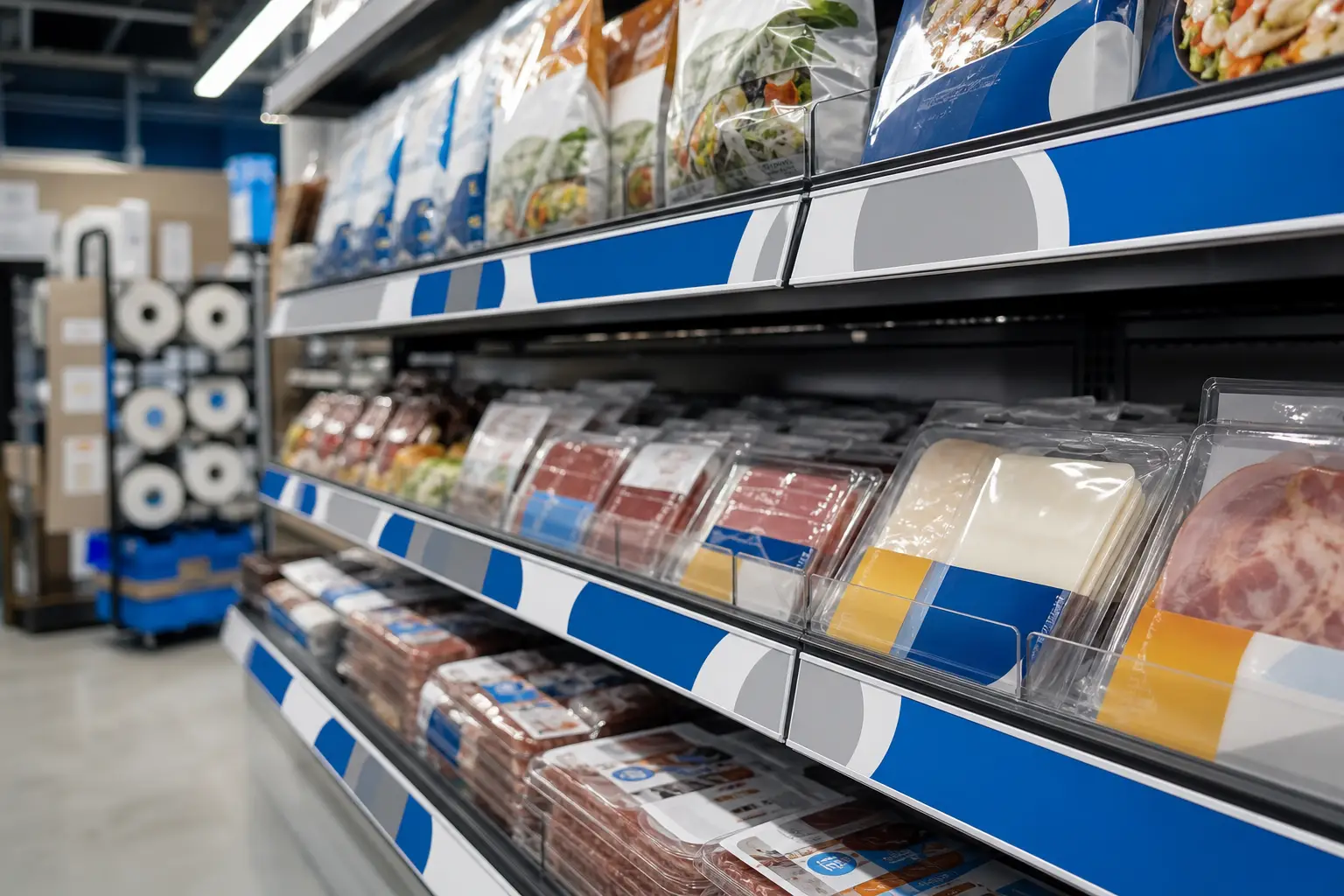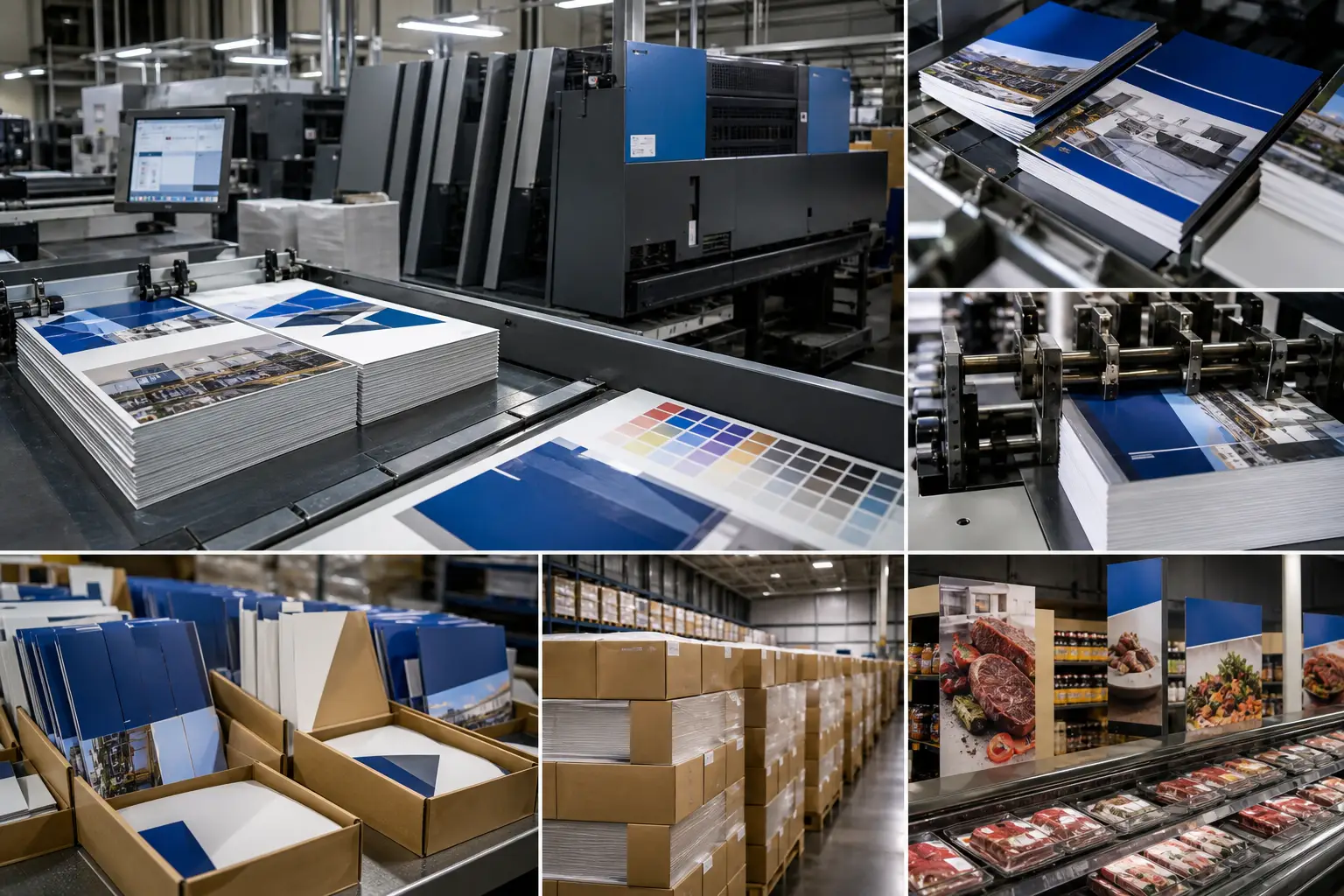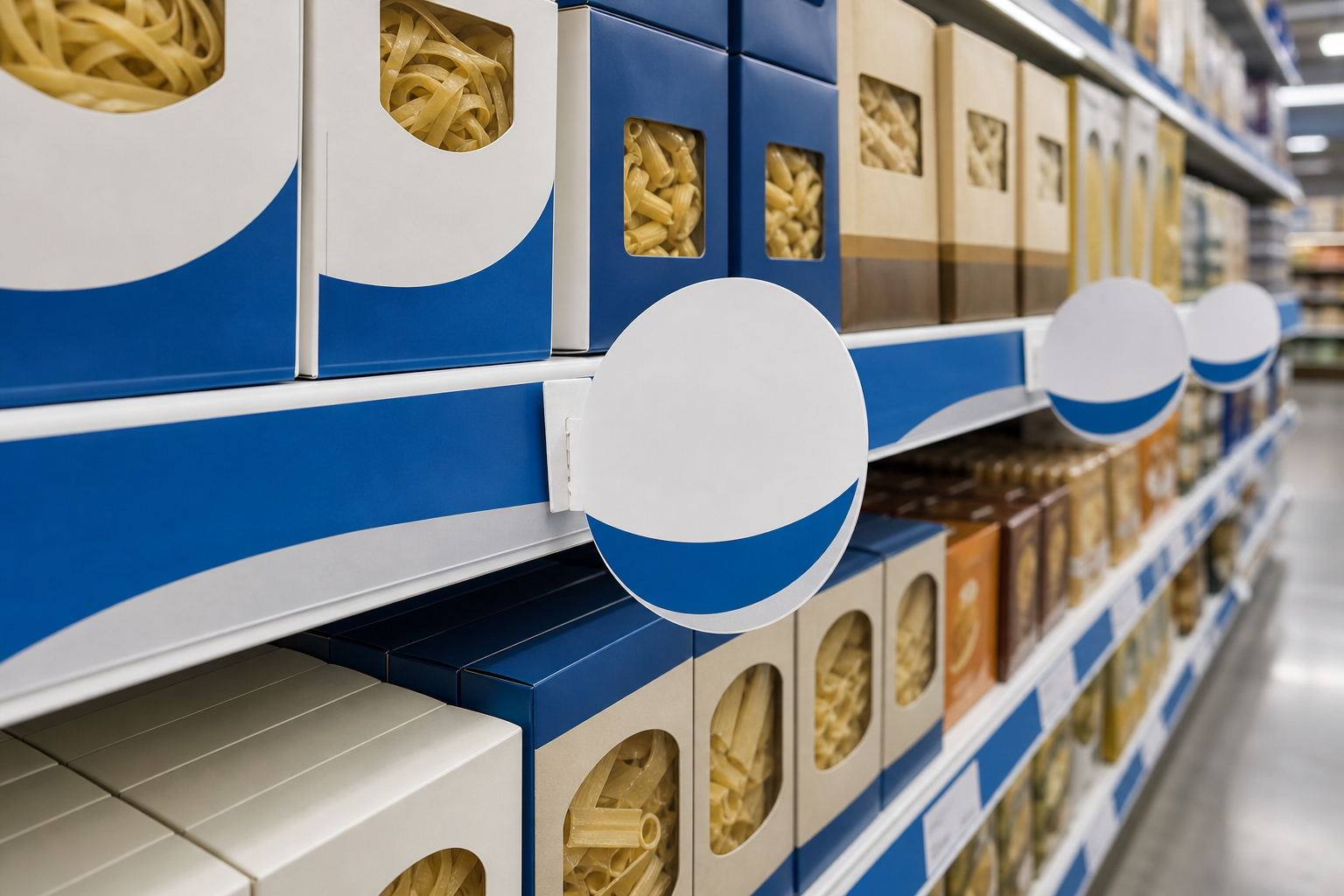
POS wobblers help grocery promotions stand out at the shelf, but they perform best when they are planned with rail strips and store-level kits. A wobbler can draw attention to a specific item or offer. A rail strip can carry the promotion across a category run. A correctly assembled kit gives each store the right components, quantities, and installation guidance for a consistent reset.
For grocery chains, regional retailers, and brands with multi-store programs, these pieces should not be ordered as separate last-minute items. They are connected parts of a shelf-level merchandising system. Coordinated print production helps teams manage color, sizing, version control, finishing, inventory, and distribution before materials reach the store.
How pos wobblers support shelf-level grocery promotions
POS wobblers are small promotional signs that extend from or move near the shelf edge. Their purpose is to break up the visual line of the shelf and call attention to a product, promotion, seasonal item, or category message.
A wobbler is most useful when shoppers need a quick cue at the point of decision. For example, a grocery program may use wobblers to identify a featured item within a longer shelf set, reinforce a limited promotional message, or give a private-label product additional visibility.
However, a wobbler is only one element in the shopper’s view. Its message, shape, placement method, and relationship to shelf labels and neighboring products all affect how it functions. A crowded shelf can make an oversized piece difficult to place. A short promotion may call for a focused, simple message. A recurring campaign may need a repeatable specification that stores can install without improvisation.
Assign each shelf component a clear role
Strong shelf programs prevent different pieces from competing for the same job. Before production begins, define the role of every component:
- Wobblers: Direct attention to an individual product, offer, or message.
- Rail strips: Create a continuous branded or promotional presence along the shelf edge.
- Shelf talkers: Add a concise supporting message where the fixture allows.
- Divider or in-case materials: Organize categories or reinforce department presentation in appropriate environments.
- Store-level kits: Combine the required pieces for accurate local execution.
This division of labor creates a clearer visual hierarchy. The rail strip establishes the shelf-level message. POS wobblers identify priority products. Supporting signage can provide information that does not fit on a smaller component.
For broader planning, see Print Group Inc.’s grocery shelf and in-store marketing solutions.
Coordinate pos wobblers and rail strips before artwork is finalized
Artwork should account for how each component will be printed, finished, packed, and installed. A shelf promotion is more reliable when the merchandising team, creative team, buyer, and print production partner resolve these details together.
Start with the physical shelf environment
Gather fixture and placement details early. Useful inputs include shelf-edge dimensions, rail style, available clearance, intended attachment approach, number of facings, and the planned location of each component. These details determine practical sizes and help avoid conflicts with shelf-edge information or product packaging.
Also identify environmental exposure. Ambient grocery aisles, refrigerated departments, freezer cases, and high-cleaning areas present different conditions. Materials used near refrigeration or moisture should be selected for the actual placement environment rather than assumed to perform like standard aisle signage. Programs involving refrigerated departments may require specialized cold case materials or a separate component specification.
Build a shared visual system
Rail strips and wobblers should use the same approved campaign files, color standards, product names, and message hierarchy. That does not mean every component must repeat the same copy. It means the pieces should look and read as one promotion when installed together.
A practical system may assign a short category or promotion message to the rail strip, then use the wobbler for a specific product callout. Keep critical copy legible at normal shopping distance. Avoid placing important information too close to trim areas, folds, attachment points, or die-cut contours.
Production-ready artwork should also document final dimensions, finishing requirements, quantities, store versions, and any variable fields. Clear specifications reduce rework when a campaign includes multiple departments, markets, or store formats.
Choose production details around the intended use
Component construction affects installation and durability. The right substrate, finish, shape, attachment approach, and packing method depend on the program’s duration and retail environment. A production review can identify where a standard rectangular piece is sufficient and where a custom shape, reinforced attachment area, or different material approach is warranted.
Consistency matters across recurring campaigns. Once a specification works within a defined fixture and deployment process, documented standards make future promotions easier to plan and reproduce. Print Group Inc.’s creative services for print performance can help align artwork with real production and finishing requirements.
Design store-level kits for execution, not just shipping
A campaign can be well printed and still fail at the store level if components arrive mixed, incomplete, or difficult to identify. Store-level kitting turns separate printed materials into an organized deployment package.
Each kit should correspond to a defined store, department, format, or campaign phase. For example, a kit may contain rail strips by aisle or section, a counted set of wobblers, supporting point-of-sale pieces, and a packing list. A simple installation guide can further clarify sequence, placement, and any store-specific variations.
Use a kit matrix to control quantities and versions
Before production, create a matrix that defines what each store receives. At a minimum, the matrix can track:
- Store or location identifier
- Store format or fixture variation
- Department or aisle destination
- Component names and quantities
- Campaign, market, language, or promotional versions
- Kit label and shipment destination
This document becomes a production control tool. It helps purchasing teams verify quantities, helps operations teams separate exceptions, and gives fulfillment teams a clear packing plan. It is particularly important when a chain has a mix of store layouts or when only selected locations receive a product-specific promotion.
Pack for the last mile inside the store
Think beyond the outer shipping carton. Long rail strips may need protective packing so they remain organized and usable at arrival. Wobblers and small pieces should be counted and grouped to limit sorting at the store. Labels should help a receiving team identify the campaign and destination without opening every package.
Coordinated kitting and distribution services can support multi-location programs by assembling materials to the approved matrix and routing them to their intended delivery points.
A practical production checklist for grocery shelf promotions
Use the following checklist before releasing pos wobblers, rail strips, and kits to production:
- Confirm the campaign objective and the action each shelf component should support.
- Verify shelf fixtures, measurements, placement areas, and required clearances.
- Separate standard components from store-specific or department-specific versions.
- Review copy, color, images, trim, folds, die cuts, and attachment areas in production-ready artwork.
- Select materials and finishing based on the actual retail environment and campaign duration.
- Finalize component quantities by store with a controlled kit matrix.
- Specify pack counts, kit labels, installation guidance, and distribution destinations.
- Plan inventory and replenishment needs for recurring or rotating promotions.
This process reduces avoidable variation between locations. It also gives merchandising and retail operations teams a clearer basis for approving components before a full rollout.
Plan shelf promotions as an integrated production program
POS wobblers, rail strips, and store kits are most effective when they are engineered as a connected system. A coordinated approach improves the relationship between the message at the shelf, the physical realities of installation, and the operational work required to deliver materials across locations.
Print Group Inc. provides grocery and retail merchandising production, in-house finishing, kitting, and multi-location distribution for programs that require consistent execution. Contact Print Group Inc. to discuss component specifications, campaign versions, and store-level fulfillment requirements for an upcoming grocery promotion.