Political campaign yard signs require more than a candidate name and a logo. A successful sign program depends on controlled artwork, realistic quantity planning, materials suited to the placement environment, and a distribution process that gets the right signs to the right people.
Campaign teams often work with shifting priorities, multiple volunteers, and several geographic areas. Planning print production before final artwork reaches press helps reduce version confusion, prevent shortages, and keep field teams supplied throughout the campaign.
Start political campaign yard signs with a clear field plan
Before discussing sign sizes or print quantities, define how the campaign will use signs. The purpose affects every downstream decision, including artwork hierarchy, material selection, quantities, packing, and delivery points.
Document the following details in one project brief:
- Candidate, committee, or issue campaign name
- Primary sign message and any required secondary information
- Planned placement areas, such as residences, events, field offices, or supporter pickup locations
- Target geography and the people responsible for each area
- Expected campaign phases, including launch, early voting, and final outreach
- Sign sizes, hardware needs, and placement conditions
- Artwork versions and who has authority to approve each version
A field plan also clarifies whether every area needs the same sign. A local campaign may use one standard design. A larger effort may need district-specific versions, co-branded materials, language variations, or event-specific signs. Defining those needs early allows the printer to structure production around a controlled version list.
Build artwork for distance, repeatability, and version control
Yard signs are viewed quickly and often from a distance. The strongest artwork gives the campaign name and the central message clear visual priority. Small text, dense lists of information, and low-contrast color combinations can lose impact once a sign is installed.
Use a single approved master file as the source for every version. Then create a version matrix that identifies exactly what changes from one sign to another. Useful fields include version name, geographic area, quantity, size, front and back artwork, and approval status.
For example, a campaign may have a standard candidate sign, a version for a specific district, and a joint sign for an event. The core design can remain consistent while only the approved variable elements change. This approach supports more reliable prepress review and makes reorders easier to manage.
For broader programs, versioned campaign printing provides a useful framework: maintain a common production structure while managing defined variations within the same coordinated program.
Prepare production-ready files before release
Artwork should be reviewed for final dimensions, bleed, image resolution, color construction, and safe areas before production begins. Keep important text and logos comfortably inside the trim area. Confirm that linked images and fonts are handled correctly in the final file.
Campaigns should also establish one approval path. A final proof is most effective when the reviewer confirms both design accuracy and operational details: version name, quantity, intended destination, and any hardware or packing requirements. This prevents a visually correct file from becoming the wrong field item.
Print Group Inc. can support production-ready artwork and prepress review as part of a larger commercial print program. Teams can also review its creative services for print performance when they need assistance preparing campaign materials for production.
Estimate quantities by territory, not one campaign-wide number
Ordering one large total for political campaign yard signs can seem simple, but it may create uneven supply. One field team may run short while another holds unused inventory. A territory-based forecast gives campaign managers better control.
Begin with the number of distribution points or field captains. Next, estimate a working allocation for each area based on supporter activity, planned events, and pickup demand. Add a controlled reserve for replacements, late requests, and high-performing areas.
Rather than treating reserve inventory as an afterthought, assign it to a specific central location and track who can release it. That keeps the campaign from placing avoidable rush reorders while still allowing the team to react to demand.
Quantity planning should also account for version splits. A total of 10,000 signs does not mean each version needs the same volume. A campaign with five versions needs quantities tied to actual deployment plans, not an even division by default.
Choose a production approach that matches the order structure
Run length, number of versions, timing, and anticipated reorders affect the appropriate production plan. High-volume, stable artwork may call for a different approach than a smaller order with several regional variations. Discuss the full program at the outset, including likely follow-up orders, so production can be planned around the actual campaign schedule.
Material and finishing choices should follow the same discipline. Consider the planned display duration, outdoor exposure, handling, and installation method. Confirm the sign format and compatible hardware requirements before printing. A production partner can help align the printed piece, finishing specifications, and fulfillment plan without treating those decisions as separate tasks.
For a broader overview of specifications, material performance, installation, and coordination, see custom yard signs for political campaigns.
Plan packing and distribution before signs leave production
Distribution can determine whether a well-produced sign program succeeds in the field. Loose shipments, unclear labels, and mixed versions create extra work for volunteers and make inventory harder to track. Organize delivery around the way campaign teams will receive and deploy materials.
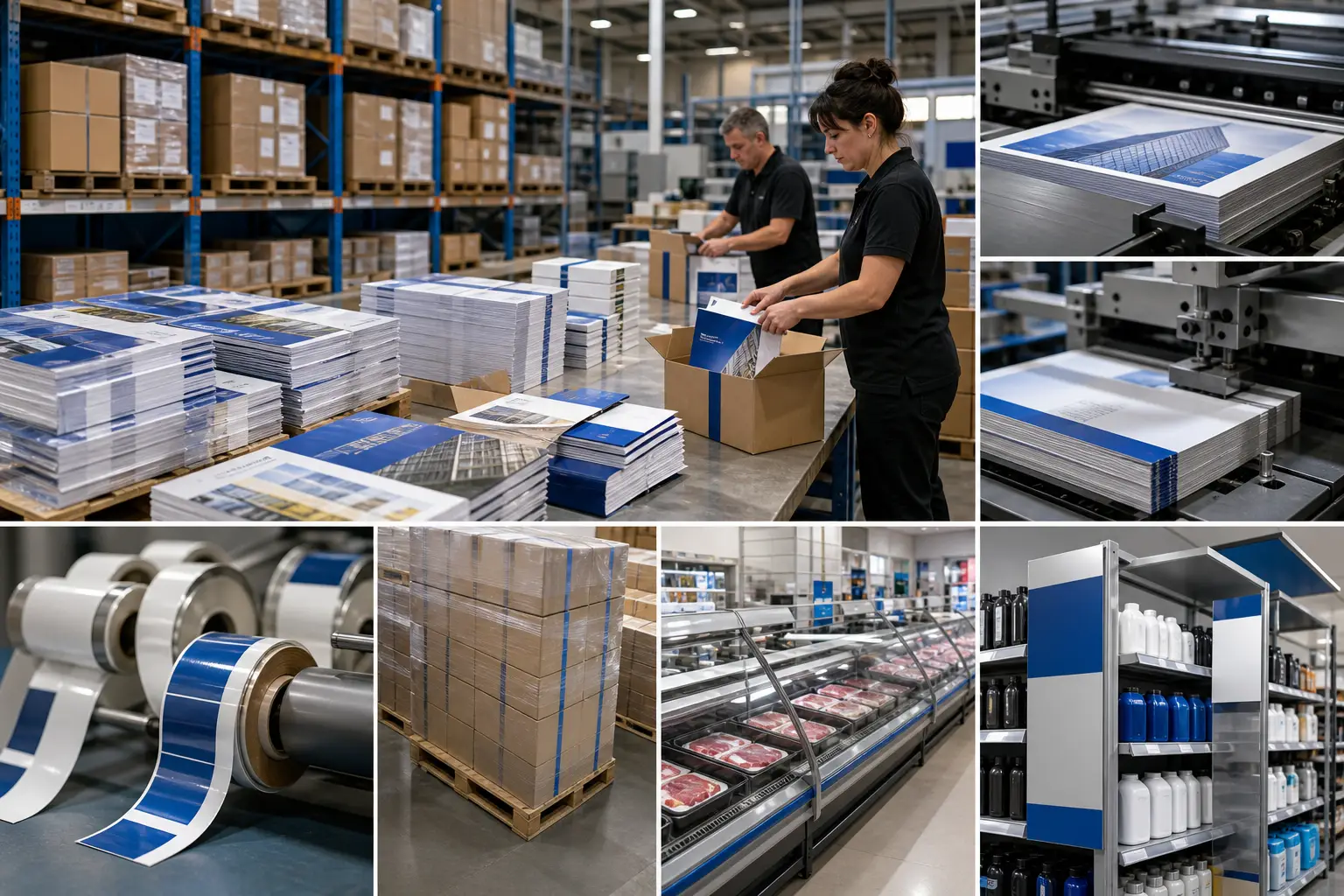
Each package should be easy to identify without opening it. At minimum, use a packing label that identifies the campaign, artwork version, quantity, destination or territory, and package sequence when an order contains multiple cartons. If hardware is included, distinguish it from the printed signs so recipients can check the shipment quickly.
Campaigns with several offices, volunteer coordinators, or regional staging points benefit from preplanned kits. A kit might include a defined quantity of one sign version, matching hardware, a packing list, and any other approved field materials. This reduces sorting at the destination and helps each recipient receive a usable set.
Kitting and distribution services can support organized assembly and national shipping when a campaign needs materials routed to multiple locations. Establish the ship-to list, delivery windows, recipient contacts, and quantity allocations before production is complete.
Use a simple control process for reorders and changes
Campaign conditions change. A message may be revised, a new area may require support, or a field office may need more inventory. The goal is not to eliminate changes; it is to handle them without mixing outdated artwork or sending the wrong version.
Maintain a live sign register with each version, its approval date, current inventory, distribution status, and reorder point. When artwork changes, retire the prior file clearly and assign a new version name. Avoid instructions such as “use the latest file” without a defined file name and approval record.
Before placing a reorder, confirm four items: the exact version, needed quantity, destination, and required arrival date. This short review creates a repeatable handoff between campaign operations and print production.
Coordinate the full yard sign program
Political campaign yard signs work best as a managed production program, not a last-minute order. Clear artwork control, territory-based quantities, practical packing, and scheduled distribution help campaign teams focus on field activity rather than sorting out print logistics.
Print Group Inc. provides commercial print production, finishing, kitting, fulfillment, and nationwide distribution for organizations managing coordinated print programs. Request a quote with the planned sign sizes, versions, quantities, hardware needs, and delivery points to begin a production-focused discussion.