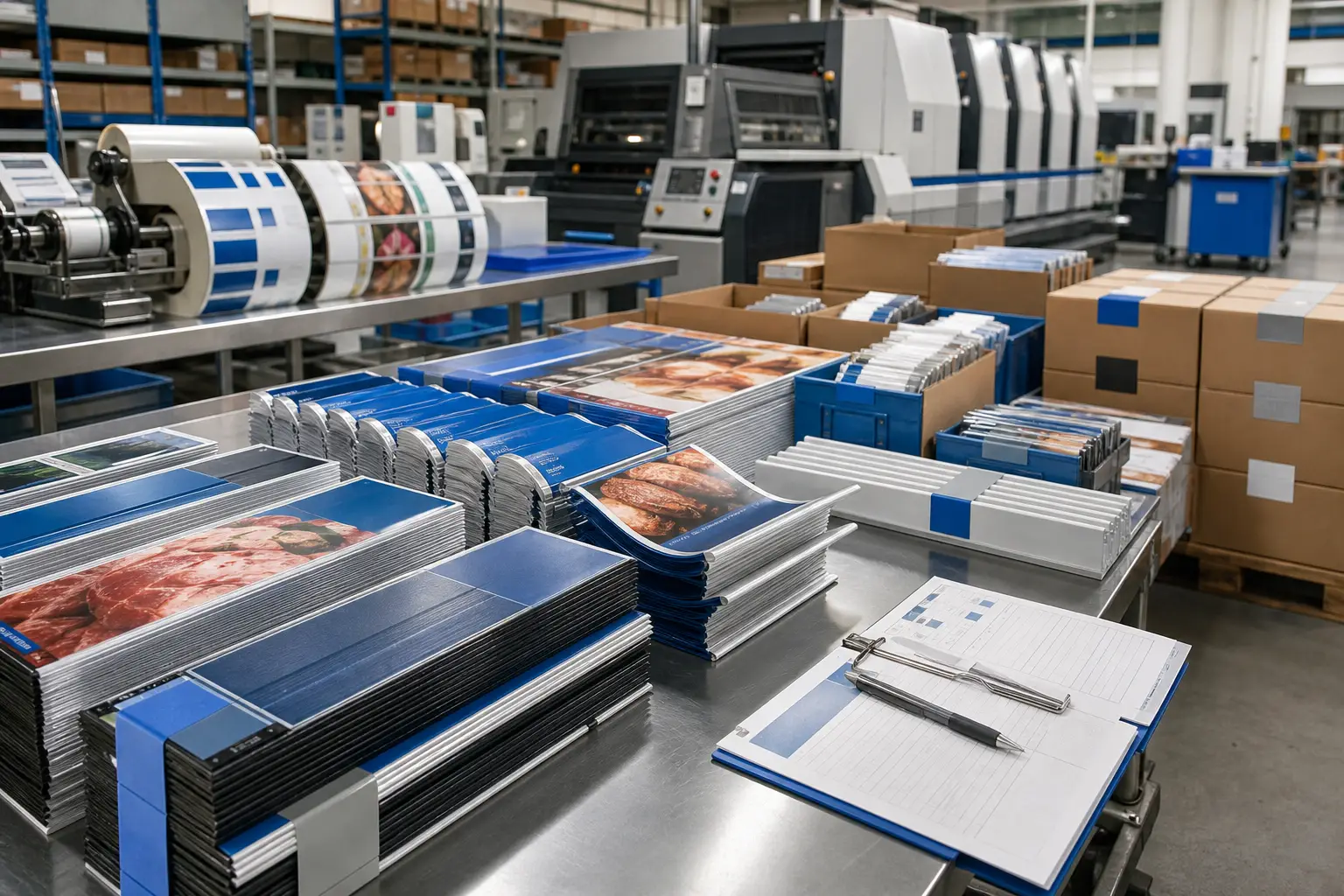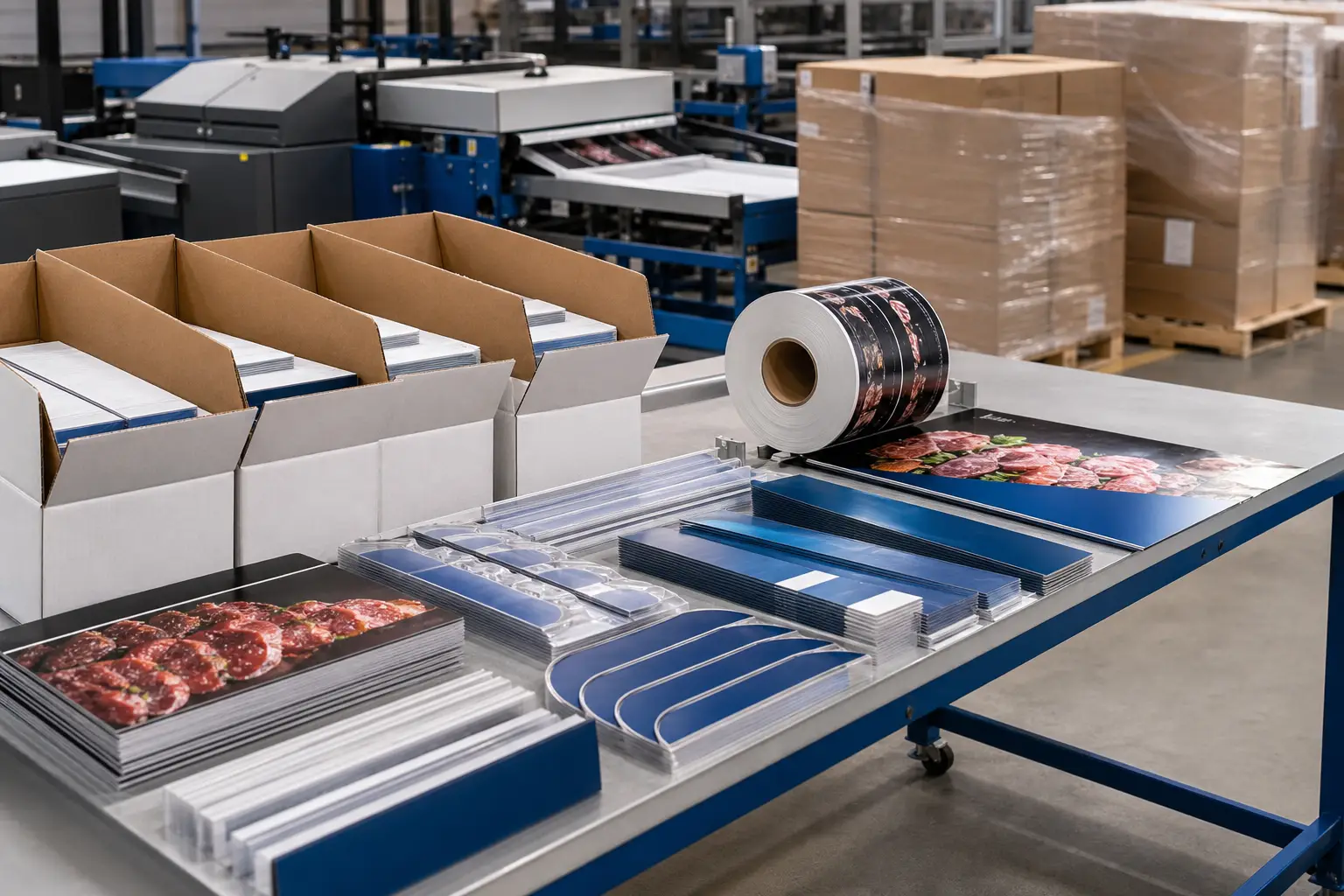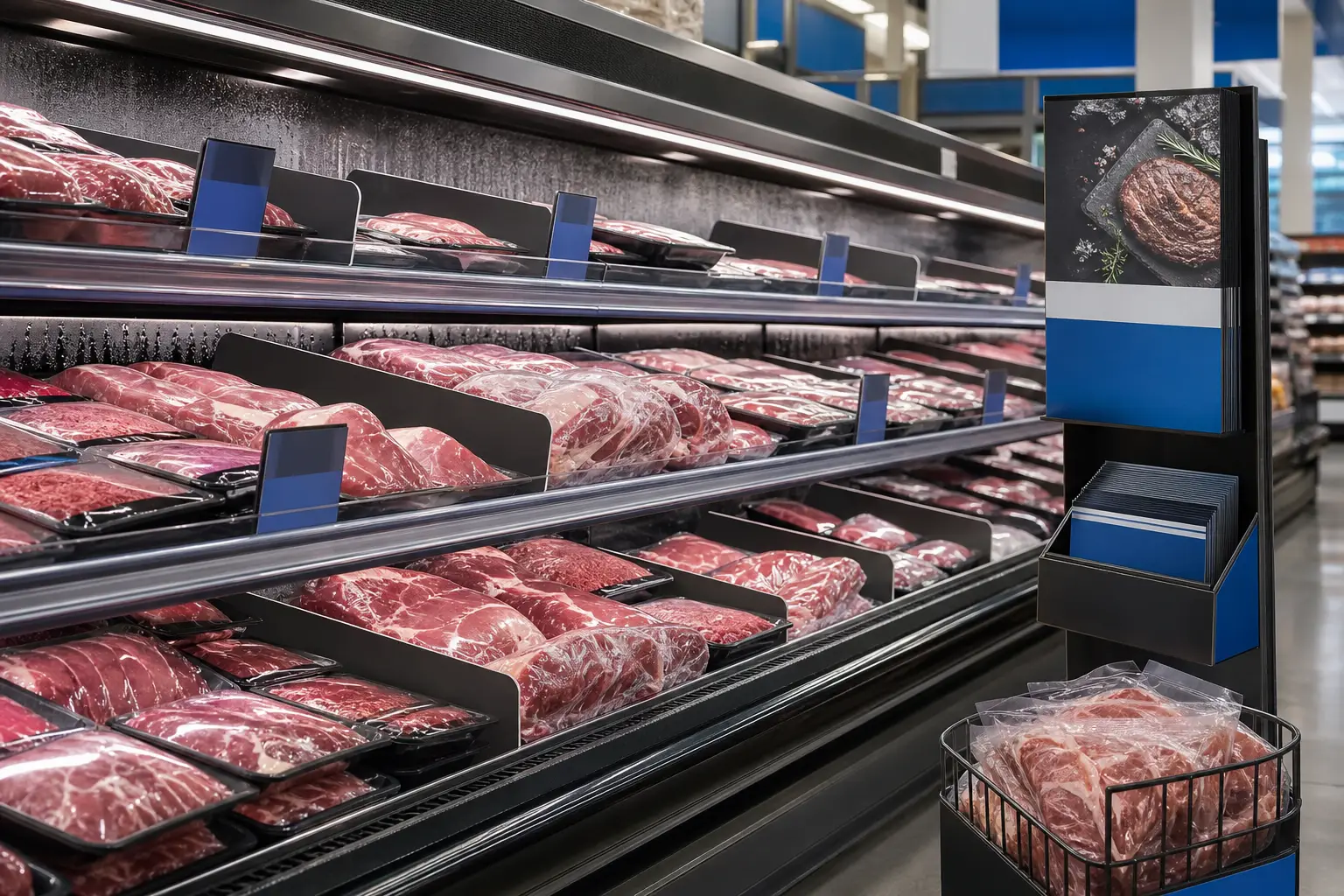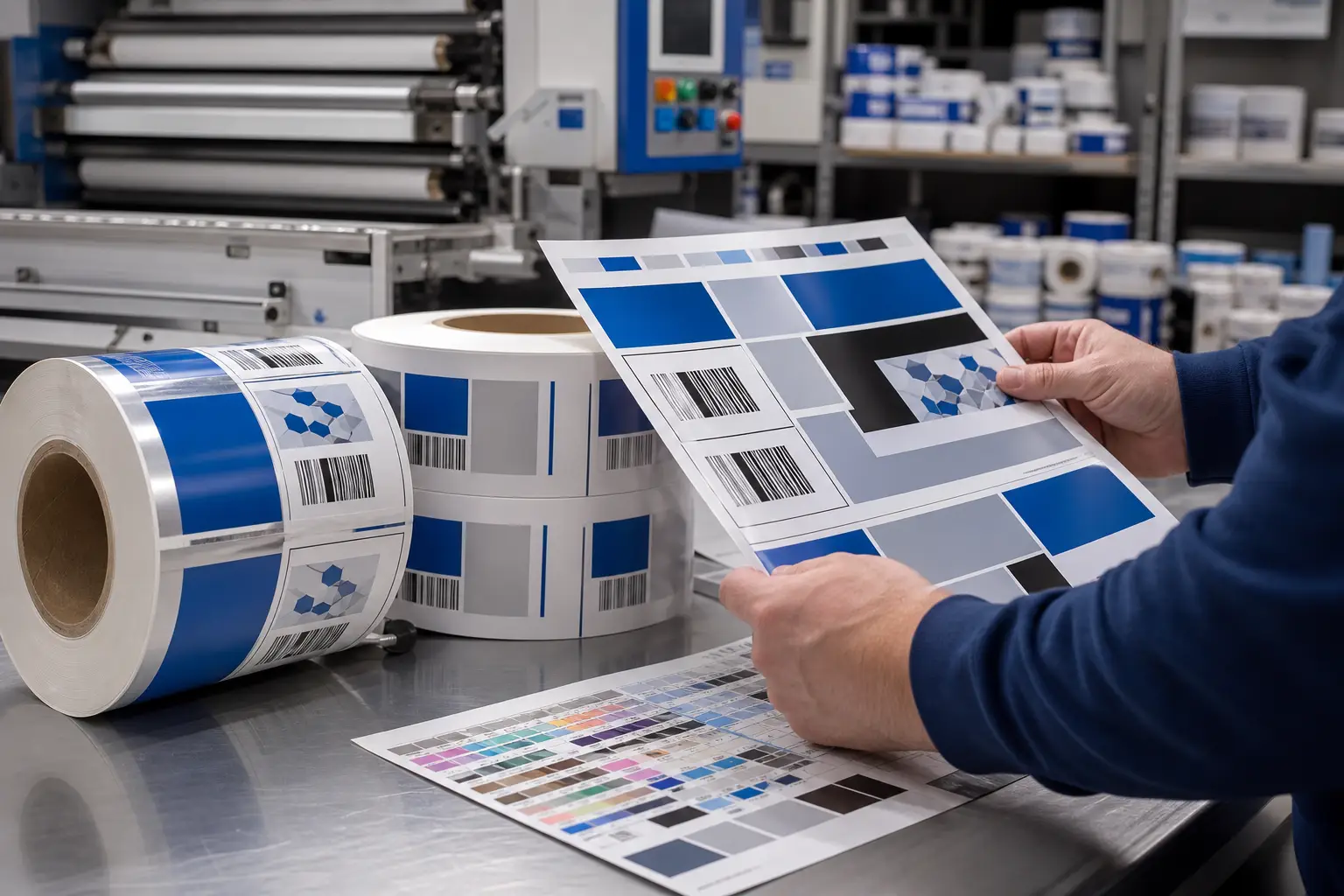
Custom roll labels for private-label and multi-SKU product programs require more than approved artwork. They need a production plan that accounts for product variations, application equipment, material conditions, color control, quantities, and delivery. When those inputs are defined early, teams can reduce preventable revisions and keep labels moving reliably through packaging and distribution.
The central planning task is to separate what remains consistent across the program from what changes by SKU. A private-label line may share a master brand system while varying by product, flavor, size, retailer, region, language, or promotional message. Each variation must be accurate, visually consistent, and organized so the correct label reaches the correct production line or location.
Start custom roll labels with a SKU map
Before selecting a label material or requesting pricing, build a complete SKU map. This is the working record of every label version the program will require. It gives procurement, marketing, packaging, operations, and the print production team a common reference point.
For each SKU, identify the details that affect the label specification:
- Product name and product category
- Container type, dimensions, and label application area
- Label size, shape, orientation, and corner treatment
- Application method, including hand application or automated equipment
- Material and adhesive needs based on the product environment
- Core brand artwork and SKU-specific copy or graphics
- Color requirements and any retailer- or region-specific versions
- Expected quantity by version, release date, and destination
A SKU map should also identify the approved name for each version. Clear file names and version codes help distinguish nearly identical labels. For example, a label for a 12-ounce product and one for a 16-ounce product may use similar art, but they should never rely on visual similarity alone for identification.
Confirm the application and product environment
A label is a production component, not simply a printed graphic. The container surface, application process, handling conditions, and storage environment all influence the final specification. A label that performs well on one container or in one setting may not perform the same way in another.
Discuss the container material, surface texture, curves, seams, and available label panel. Also clarify when labels are applied. Conditions can differ when application occurs before filling, after filling, in a refrigerated area, or on products that may encounter moisture during handling.
Roll construction matters for automated application. The production team or equipment operator should provide the required unwind direction, core size, maximum roll diameter, label spacing, and any machine-specific limitations. Those details affect how labels feed through applicators and should be settled before production begins.
Programs involving refrigerated, frozen, or moisture-exposed products need especially careful material and adhesive conversations. Cold storage and freezer label planning focuses on the practical performance factors that can affect labels in demanding temperature and moisture conditions.
Build a shared label specification
A shared specification turns a collection of label designs into a repeatable production program. It establishes the decisions that should remain consistent across versions, while documenting approved exceptions.
Material, adhesive, and finish
Select label stock and adhesive based on the container, the product environment, and expected handling. The finish should support the intended presentation and operational use. It may also affect how colors appear, how the surface feels, and how the label holds up during distribution and retail handling.
Do not assume one construction fits every SKU. A program might need separate specifications for products with different containers or storage conditions. When feasible, standardizing compatible constructions across a product family can simplify purchasing and inventory management.
Label format and roll details
Document final dimensions, die shape, web width, repeat, roll quantity, core, and unwind direction. These items should appear in the specification, not only in an email thread. A complete record reduces the risk of ordering a visually correct label that cannot run as intended on the application equipment.
For higher-volume programs, roll label production should be planned around both the label design and the operating requirements of the application process. This creates a better foundation for repeat orders and future SKU additions.
Control artwork across versions
Private-label programs often need a balance between a unified brand appearance and fast, accurate SKU changes. The most reliable approach is to establish a master artwork structure. Shared elements remain locked or controlled, while approved variable areas are clearly identified for product-specific content.
Typical controlled elements include logos, color builds, typography, legal copy supplied by the brand, and recurring visual elements. Variable areas may include product names, flavor identifiers, net contents, item codes, retailer marks, promotional copy, or language versions. The assignment of responsibilities should be clear before files enter prepress.
Use a deliberate review process. Reviewers should check the actual label version against the SKU map, not just assess whether the design looks correct. Important checks include product name, version code, dimensions, placement, required variable content, and separation from similar products.
Production-ready artwork should also account for die lines, bleed, safe areas, image resolution, and the printing process. Early prepress review can identify file issues before they become production delays. When a program requires support beyond supplied files, Print Group Inc. offers creative services built for print performance.
Plan quantities, releases, and inventory by version
Quantity planning should happen at the SKU level. A total program quantity is useful, but it does not tell the production team how many rolls of each version are needed or where they must go. Forecasts should distinguish between launch quantities, recurring demand, seasonal versions, retailer-specific releases, and contingency inventory.
Consider how the program will be released. Some organizations order all versions together for a product launch. Others use planned replenishment cycles or hold inventory for repeat orders. The right approach depends on forecast confidence, change frequency, storage capacity, and how quickly artwork or product details may change.
Maintain an inventory record that identifies the SKU, revision, quantity on hand, location, and release status. This is particularly important when older and newer artwork versions may overlap. A documented disposition plan for obsolete material can help prevent unintended use.
Coordinate delivery with packaging and retail operations
Labels only create value when they arrive in the correct quantity, version, and sequence for the receiving operation. Provide delivery requirements early, including ship-to locations, receiving contacts, requested arrival dates, pallet or carton preferences, and any need for labeled, separated, or staged shipments.
Multi-location programs benefit from clear pack-out instructions. Each shipment should be easy for the receiver to identify and reconcile against the order. If labels move alongside inserts, header cards, shelf materials, or other printed components, coordinate those items as one release plan rather than as unrelated orders.
For programs that require organized assembly and shipment to multiple destinations, kitting and distribution services can support a more controlled delivery workflow.
Use a repeatable approval-to-reorder process
Once a program is established, document the approved production standard. Keep the final specification, approved artwork, proofing history, version list, and reorder instructions together. This preserves institutional knowledge when product teams, buyers, or operations contacts change.
Before each reorder, confirm whether anything has changed: container dimensions, application equipment, storage conditions, artwork, quantities, delivery locations, or product lineup. A short review is often enough to catch a change that affects label performance or version accuracy.
Print Group Inc. supports nationwide label and packaging production for organizations that need coordinated custom roll labels, repeatable execution, and distribution planning. To discuss an upcoming private-label or multi-SKU program, request a custom quote with available SKU counts, label dimensions, quantities, application details, and delivery requirements.