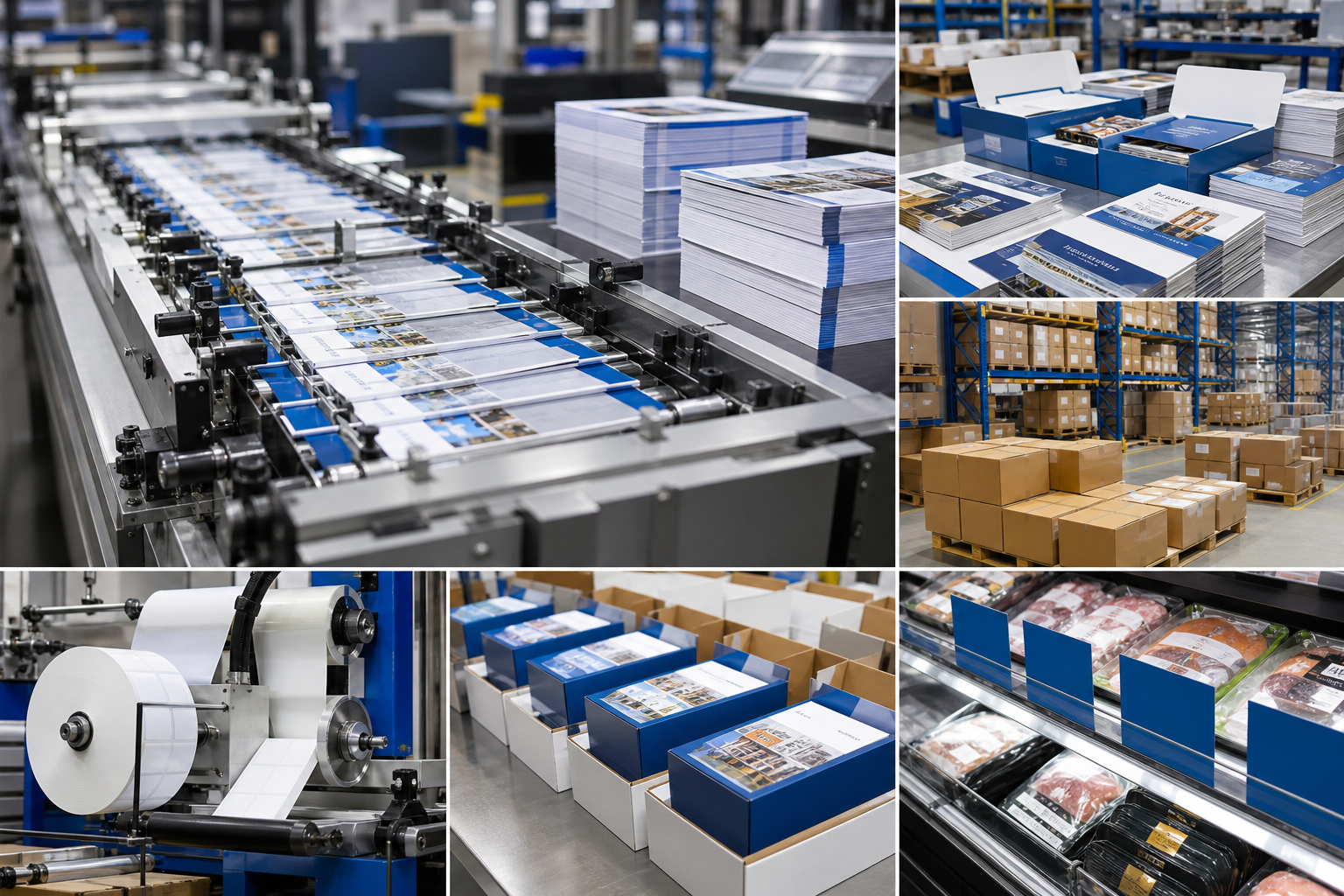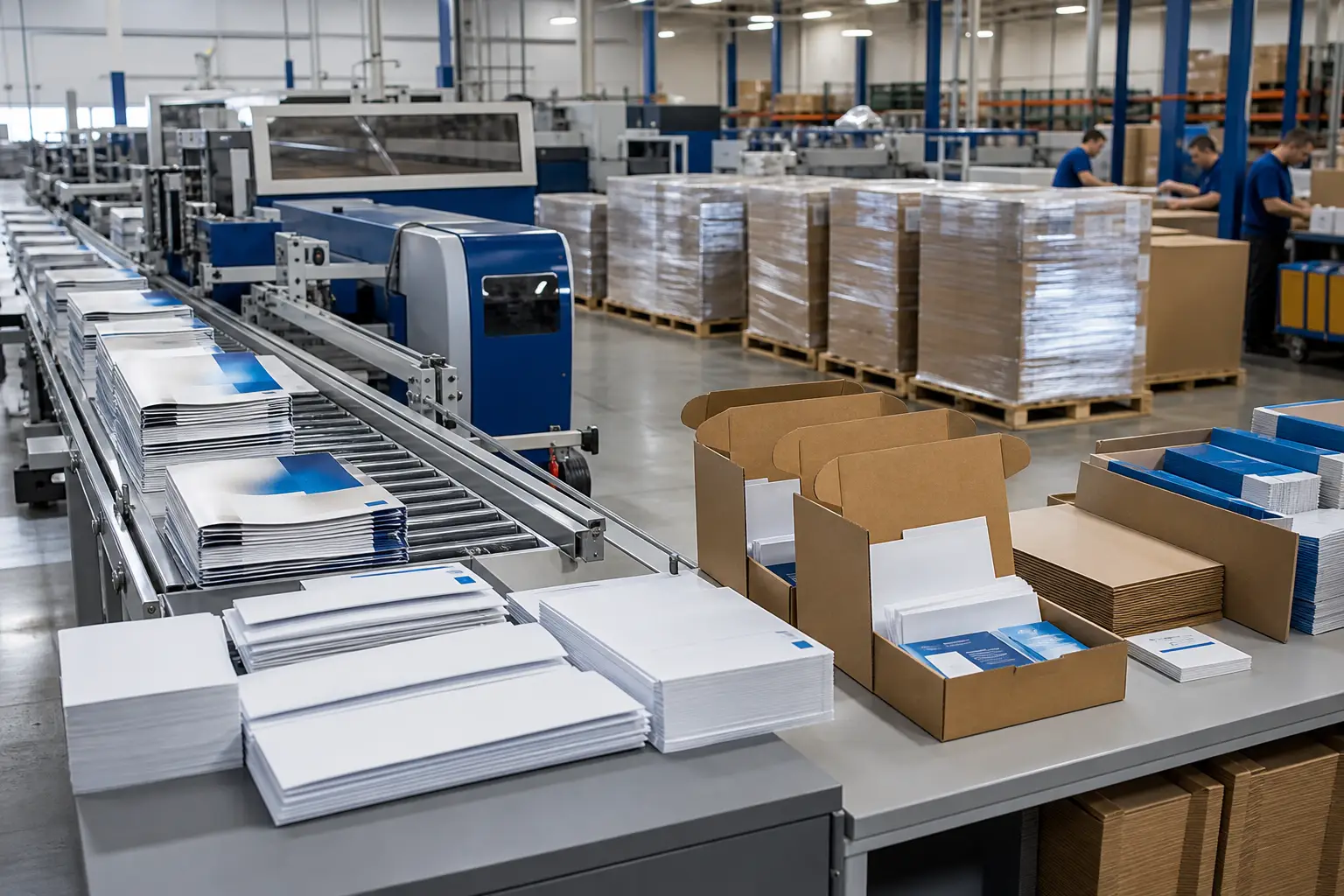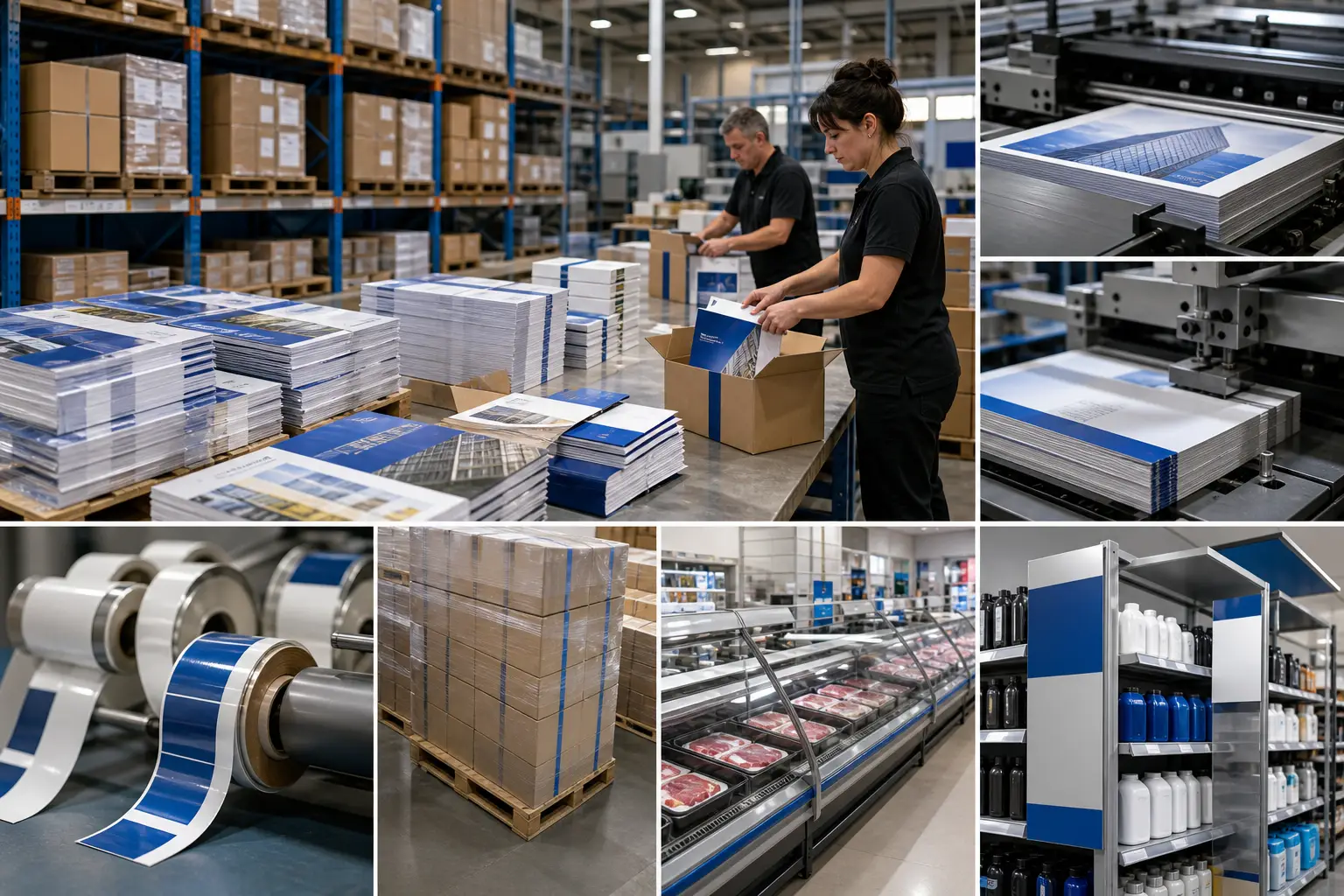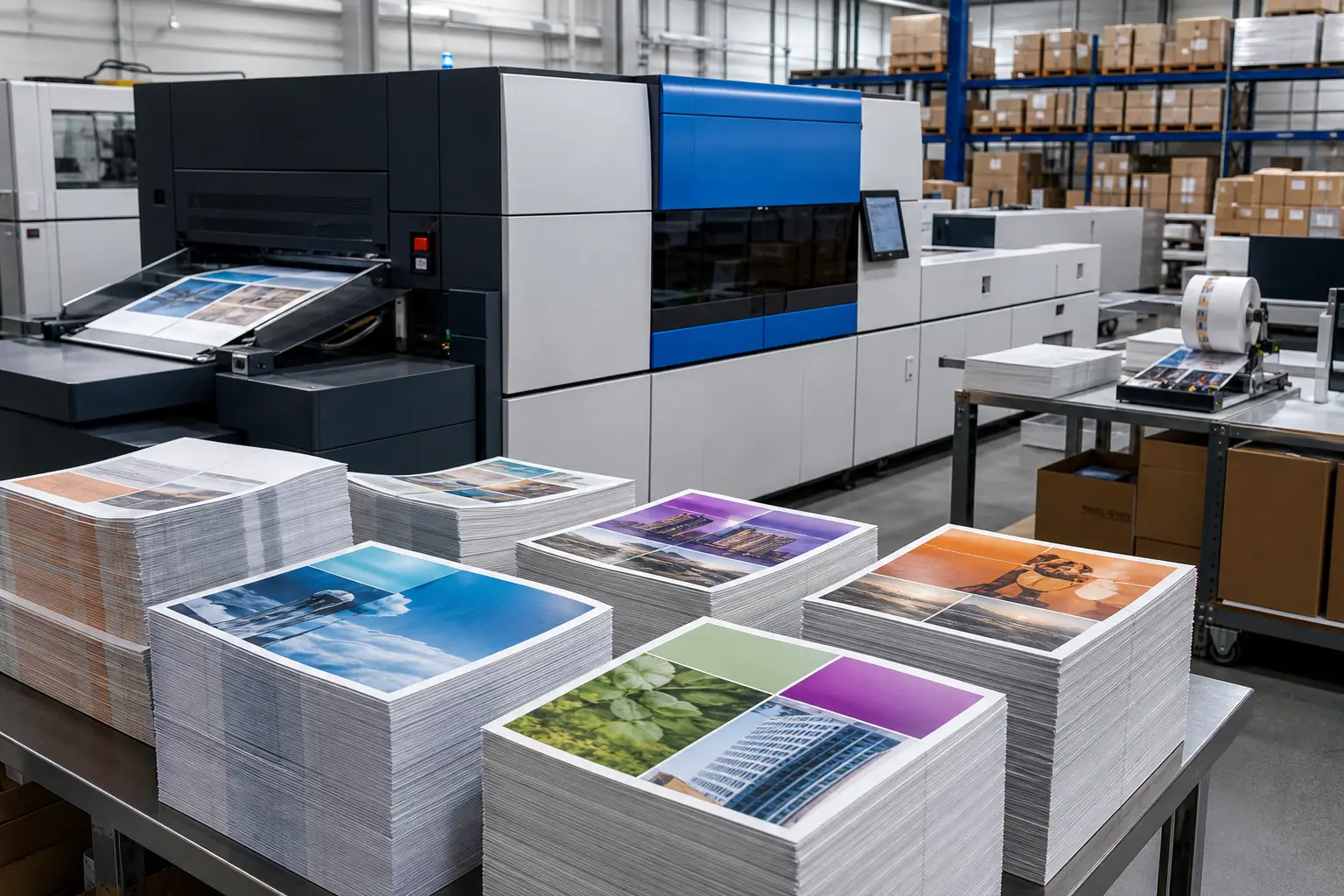
Direct mail fulfillment pricing is determined by the full production and distribution workflow, not by postage or printing alone. The cost of a program can change with format, quantity, paper, personalization, number of components, mailing-list readiness, kit assembly requirements, inventory needs, and the number of final destinations.
For a useful quote, define what must be produced, assembled, addressed, mailed, stored, and delivered. A clear scope helps a production partner select an efficient print method, build an accurate schedule, and reduce avoidable handling steps.
What is included in direct mail fulfillment pricing?
A direct mail program may include several connected services. Some campaigns require only printed mailers and mailing preparation. Others involve variable-data printing, inserts, matched components, staged inventory, and location-specific shipments.
Common cost categories include:
- Prepress and file preparation: reviewing production-ready artwork, preparing versions, and setting up variable data.
- Print production: selecting the production method, paper or stock, inks, finishing, and run quantity.
- Mailing preparation: processing approved mailing data, addressing pieces, and preparing the job for mail entry.
- Materials and inserts: envelopes, reply pieces, inserts, tabs, labels, or other campaign components.
- Kitting and assembly: collating, folding, inserting, matching, packing, and labeling kits.
- Inventory and fulfillment: receiving, storing, picking, packing, and releasing materials over time.
- Distribution: shipping to stores, branches, offices, sales teams, or other designated delivery points.
Integrated direct mail and fulfillment services can bring these steps into one coordinated production plan. That approach is especially useful when the program has multiple versions or delivery channels.
Direct mail fulfillment pricing cost drivers to evaluate
1. Quantity, format, and print method
Quantity affects material usage, press setup, finishing time, and the production method that best fits the job. High-volume, identical pieces may be suited to sheet-fed offset printing. Shorter runs, frequent changes, and recipient-level content often favor digital production.
Format matters as well. A flat postcard, folded self-mailer, letter package, booklet, or catalog each requires different production and assembly steps. Size, page count, folds, coatings, die cuts, and binding can also change the overall cost structure.
Paper selection should support the purpose of the mailer and the requirements of the mailing format. Heavier stocks, specialty materials, and complex finishing can add cost, but they may be appropriate when durability, presentation, or brand consistency is important.
2. Personalization, data quality, and version control
Personalized mail requires a reliable connection between approved data and printed output. Variable fields may include names, locations, offers, QR codes, images, or calls to action. Each added field can increase setup, proofing, and data-processing requirements.
Clean, complete data supports more predictable pricing. Duplicate records, missing address fields, inconsistent formats, and late list changes can create additional production work. Teams should establish ownership for data approval and provide a final version before production begins.
Versioned programs need similar discipline. A retailer may need different messaging by market, while a manufacturer may need distinct materials by product line or dealer group. Planning these versions as one controlled job can simplify production. For campaigns built around recipient data and coordinated versions, review personalized direct mail production requirements before requesting pricing.
3. Assembly and kitting complexity
Kitting costs reflect the number of components and the handling needed to assemble them accurately. A simple one-piece mailing requires less labor than a kit with a letter, brochure, sample card, response device, envelope, and location-specific inserts.
Pricing also changes when components must be matched by recipient, market, store, or sales territory. Sequential counting, bundle quantities, pack-out instructions, labels, and quality checks should be included in the project scope.
Describe the finished kit in practical terms: what goes inside, how many of each item are needed, which items vary, how it should be packed, and where it must go. Detailed instructions help prevent a quote from overlooking necessary assembly steps.
4. Mailing preparation and release schedule
Mailing costs depend on the format, recipient count, approved data, piece construction, and planned mail release. A campaign that mails all pieces at once has a different workflow than one released in waves over several weeks.
Mail date flexibility can also affect production planning. When print, finishing, addressing, and mail preparation are scheduled as one workflow, teams can identify dependencies before they threaten a launch date. Provide the desired in-home window, if applicable, along with the firm deadline for final materials.
Some local coverage programs do not use a traditional recipient mailing list. Organizations evaluating that approach can compare its production needs on the USPS EDDM printing service page.
5. Multi-location distribution and freight
Direct mail fulfillment pricing often increases when the project also includes shipments to multiple locations. Distribution costs vary by the number of delivery points, shipment sizes, carton configuration, shipment timing, and whether each location receives a unique kit.
For example, a campaign may include a national direct mail drop plus store kits for display materials, sales collateral, or follow-up events. Each store may need different quantities based on footprint, region, or promotion schedule. That requires controlled allocation and clear pack-out rules.
Organizations should provide a destination list early. Include complete ship-to addresses, recipient contacts, required arrival dates, receiving limitations, and any location-specific quantities. A structured kitting and distribution plan helps coordinate those variables before materials leave the facility.
How to request an accurate direct mail fulfillment quote
The best estimate starts with operational detail. Even if every decision is not final, identify what is known and flag variables that remain open.
- Campaign objective and target launch date
- Total quantity and expected quantity by version
- Finished size, page count, folds, stock preferences, and finishing requirements
- Whether artwork is final and production-ready
- Personalization fields, data source, and data approval process
- Mailing format, anticipated number of recipients, and desired release schedule
- All kit components, assembly sequence, and pack-out instructions
- Inventory duration and anticipated fulfillment releases
- Number of shipping destinations, quantities by destination, and delivery timing
Ask for the quote to separate major production and fulfillment components where practical. A clear breakdown makes it easier to compare alternate quantities, formats, kit configurations, and distribution scenarios without losing sight of the total program cost.
Ways to control cost without reducing execution quality
Cost control begins with planning, not with removing essential production steps. Standardizing a core format across versions can reduce complexity while preserving relevant regional or audience messaging. Consolidating similar components may also simplify assembly.
Early approval of artwork, data, and destination lists reduces late-stage changes. It also gives the production team more flexibility to schedule printing, finishing, and distribution efficiently. If a program repeats, maintaining approved specifications and pack-out instructions can improve repeatability from one cycle to the next.
Print Group Inc. coordinates commercial printing, variable-data production, mailing, kitting, fulfillment, and multi-location distribution for organizations with complex direct mail programs. Share the campaign scope, components, quantities, versions, and delivery plan to develop a production approach aligned with the work required.