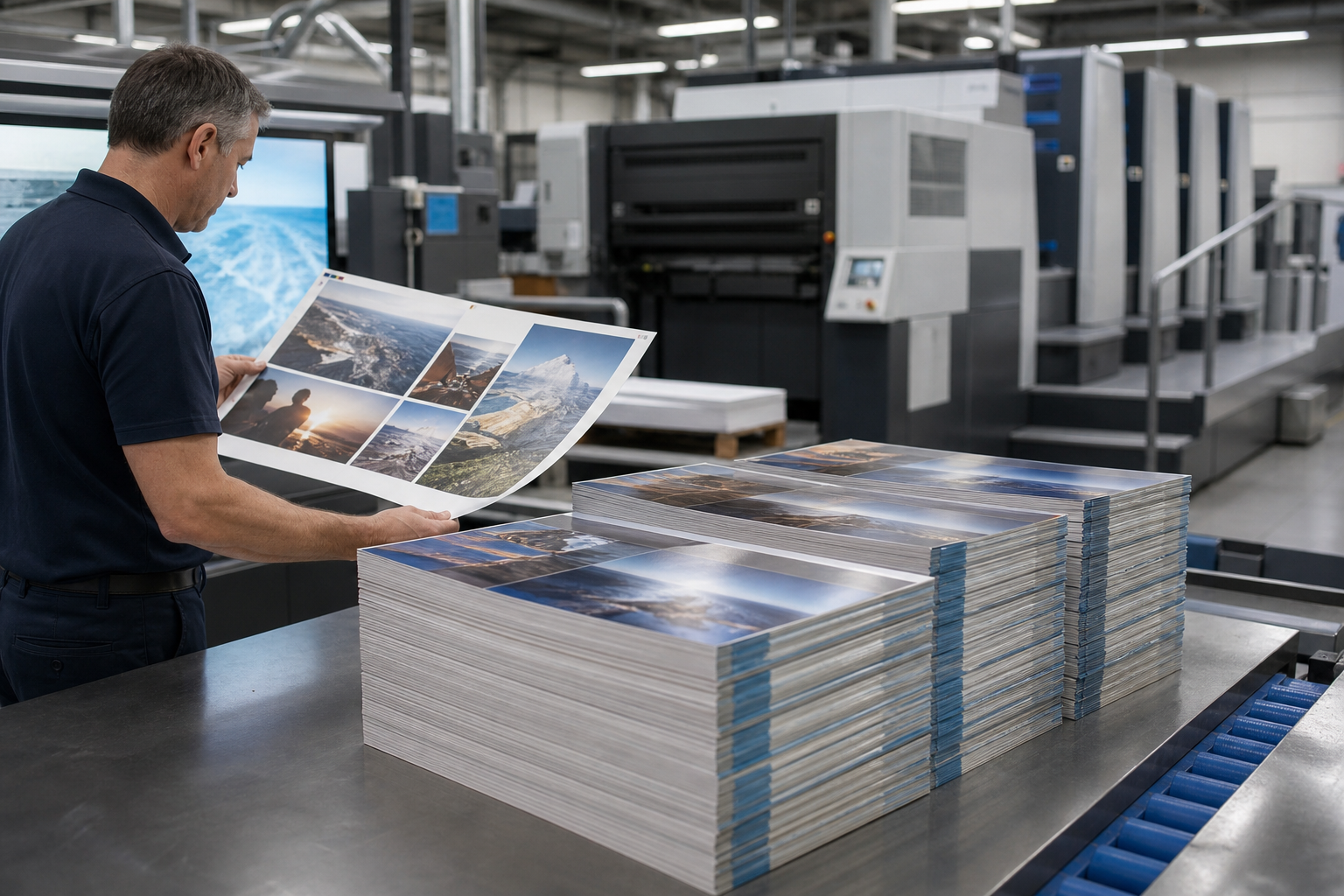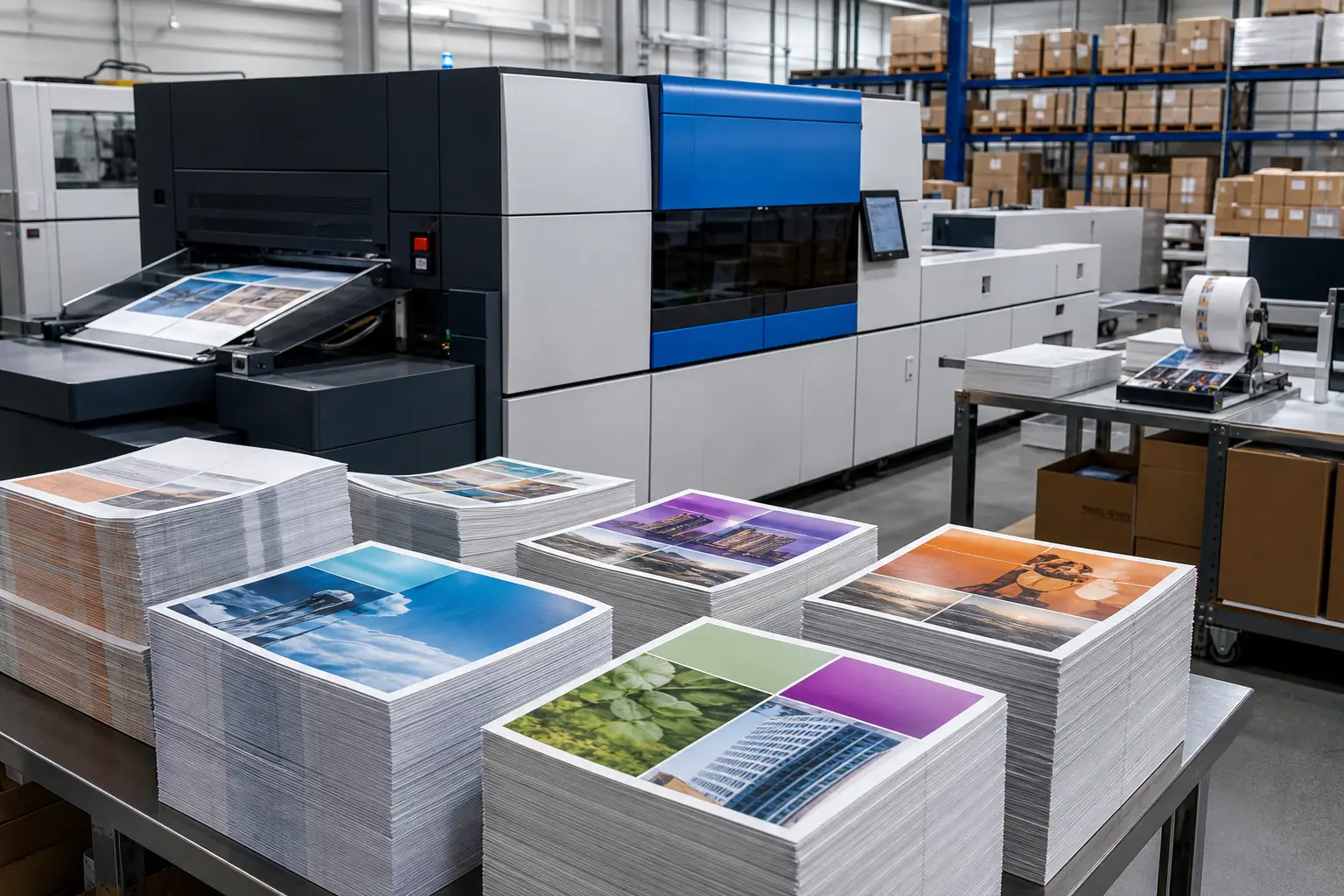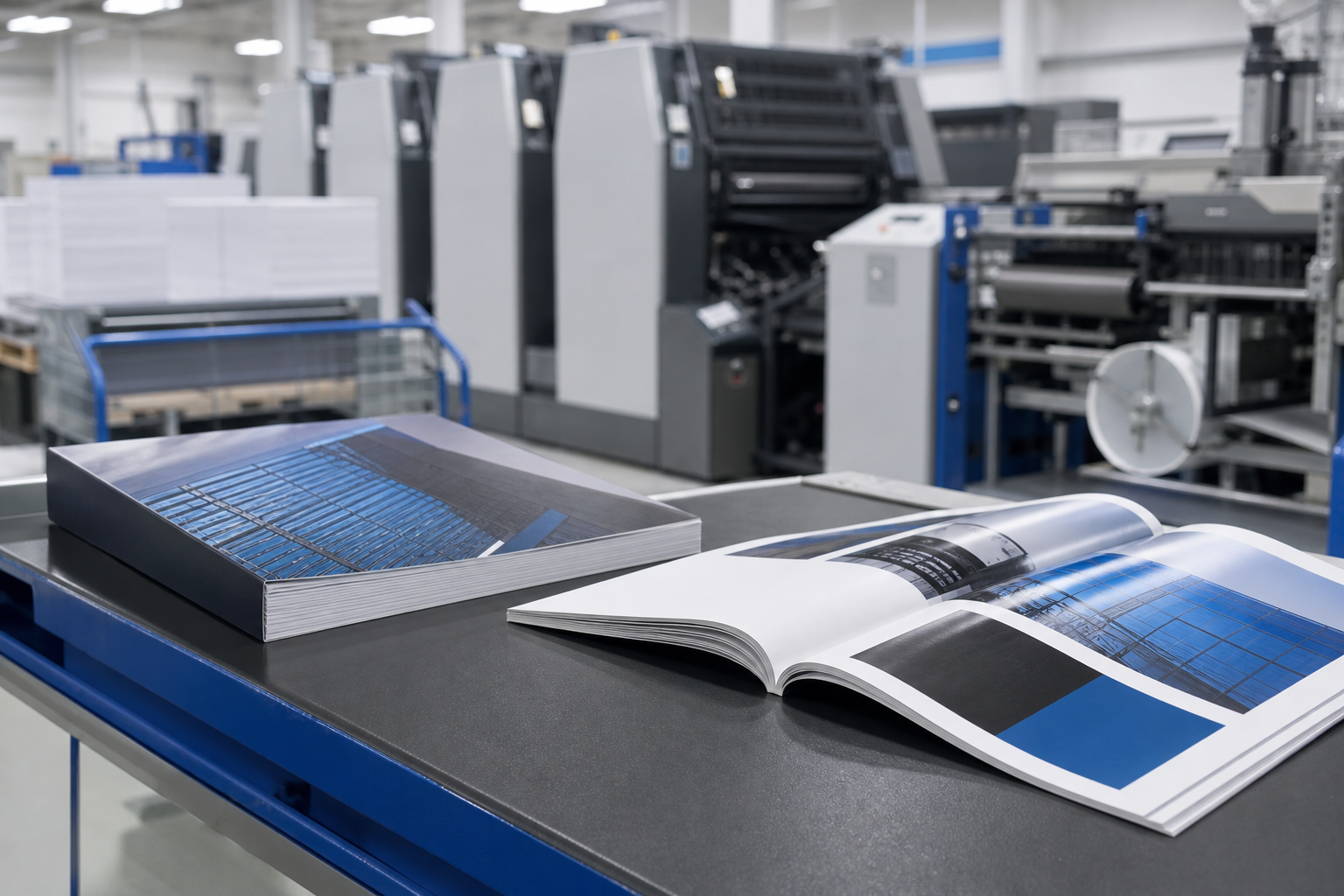
Commercial publication printing depends on more than a well-designed file. Paper, binding, and finishing determine how a publication feels, functions, survives handling, and represents the organization behind it. The right specification should support the document’s purpose, page count, audience, distribution method, and expected service life.
A glossy, image-led alumni magazine has different production needs than a corporate annual report, product catalog, training guide, or multi-location sales kit. Early production decisions help teams avoid preventable issues such as an unsuitable binding method, excess mailing weight, show-through on text pages, or a cover that does not hold up in circulation.
Start commercial publication printing with the document’s job
Before selecting stocks or finishes, define what the printed piece must do. This creates a practical framework for every later decision.
- Reading experience: Is the piece primarily long-form text, photography, product information, or a mix?
- Frequency: Is it a one-time report, a recurring magazine, or a catalog updated in scheduled cycles?
- Handling: Will readers keep it on a desk, carry it in the field, reference it repeatedly, or receive it in the mail?
- Page count and format: These factors narrow the viable binding options and affect paper bulk.
- Distribution: Individual mailings, bulk shipments, event handouts, and location-specific kits create different packaging and fulfillment needs.
- Version control: Does the project include regional editions, department-specific inserts, personalized content, or changing product information?
A production brief should also identify the final trim size, quantity, anticipated release date, and any inserts or reply materials. For recurring programs, document approved specifications and color expectations. That record helps protect repeatability from one issue or campaign to the next.
Choose paper for readability, reproduction, and handling
Paper selection is a balance between visual effect and practical performance. A sheet affects ink appearance, opacity, stiffness, fold quality, weight, and the finished publication’s overall bulk. “Heavier” is not automatically better; the right choice depends on the role of each section.
Text paper: match the surface to the content
Coated text stocks typically support crisp image reproduction and rich color. They are often appropriate for photography-forward magazines, catalogs, brochures, and image-driven corporate pieces. Gloss coatings can create visual impact, while matte or dull coatings can reduce glare and provide a more restrained reading surface.
Uncoated text stocks offer a tactile feel and can suit letter-style communications, editorial reading, forms, and materials intended for writing. However, uncoated papers may produce a different color appearance than coated sheets. Images and brand colors should be evaluated on the actual stock rather than judged only from an on-screen proof.
Opacity matters for text-heavy publications. A more opaque sheet helps limit show-through from the reverse side, which can improve legibility. At the same time, increasing paper weight affects postage, shipping, storage, and the publication’s thickness. Production teams should consider these variables together.
Cover paper: protect the piece and establish hierarchy
The cover usually needs more stiffness than the interior. It also establishes a visual and tactile distinction at first contact. A heavier cover can support a premium presentation and withstand repeated handling, but it must still fold and bind properly for the chosen format.
For corporate communications, the cover does not need to carry every message. A clean cover with a durable finish may serve the program better than one overloaded with graphics or specialty effects. If a publication includes mail panels, variable information, or labels, leave appropriate space and plan the workflow before final artwork is released.
Organizations producing magazines and other credibility-driven pieces can review publication and magazine printing options while developing the format and material specification.
Select a binding method that supports page count and use
Binding affects how a publication opens, how long it lasts, and whether readers can use it comfortably. The page count, paper thickness, trim size, and intended use should guide the choice.
Saddle stitching for lighter publications
Saddle stitching secures folded pages through the spine with wire staples. It is commonly used for lower-page-count booklets, newsletters, event programs, and many magazines. The format opens well and supports efficient production, but it has practical page-count limits. Thicker paper increases the publication’s bulk and can affect the finished edge of nested pages.
Designers should account for page creep, which occurs when inner folded pages extend slightly farther than outer pages. Prepress planning can compensate for this movement so margins, folios, and images remain properly positioned after trimming.
Perfect binding for a square-spine presentation
Perfect binding uses adhesive to secure pages at the spine and creates a flat, printable spine. It is often suited to catalogs, annual reports, manuals, and thicker publications. The spine can improve shelf identification, but it also requires sufficient page count and an appropriate paper-and-cover combination.
Keep critical text, charts, and images clear of the inside margin. Content placed too close to the spine may be harder to read. A production-ready layout should include suitable inside margins from the beginning instead of trying to solve the issue after pagination is complete.
Other functional binding approaches
Wire-o and coil binding can allow pages to lie flatter, which may help with reference guides, training materials, and working documents. Mechanical binding may be a better fit when readers need to write on pages or keep a manual open during use. The tradeoff is a different visual profile and added consideration for packing and distribution.
For detailed planning around functional documents, see Print Group’s guidance on instruction manual printing. For reports intended for stakeholders, the related guide to annual report paper, binding, finishing, and distribution offers a focused planning reference.
Use finishing to add protection, hierarchy, or tactile contrast
Finishing should serve a clear purpose. It can protect a cover, distinguish an important element, support brand presentation, or improve durability in transit. It should not be treated as a last-minute decorative add-on.
- Aqueous coating: A protective coating often used to improve scuff resistance and provide a consistent surface appearance.
- UV coating: A coating that can create high gloss or highlight selected areas when used as a spot treatment.
- Soft-touch lamination: A laminate that creates a smooth, tactile cover surface and can add protection.
- Matte or gloss lamination: Laminates that change the cover appearance while helping protect it from handling.
- Spot treatments and embossing: Targeted details that can add visual or tactile emphasis to a logo, image, or title.
Finishes can influence folding, mailing, turnaround planning, and the ability to write or overprint on a surface. They may also change how color appears. Requesting a physical sample or proof is especially useful when a finish is central to the finished presentation.
Coordinate artwork, color, and distribution before production
Commercial publication printing works best when creative, prepress, bindery, and distribution requirements are considered as one workflow. Supply production-ready artwork with final trim size, bleed, image resolution, fonts, and correctly built pages. Confirm whether files should be supplied as reader spreads or single pages based on the binding method and production plan.
For recurring or versioned work, maintain controlled source files and a clear approval process. A master specification can identify approved paper, cover treatment, binding, brand-color targets, version naming, and delivery requirements. This discipline supports color consistency and helps reduce confusion when multiple teams contribute content.
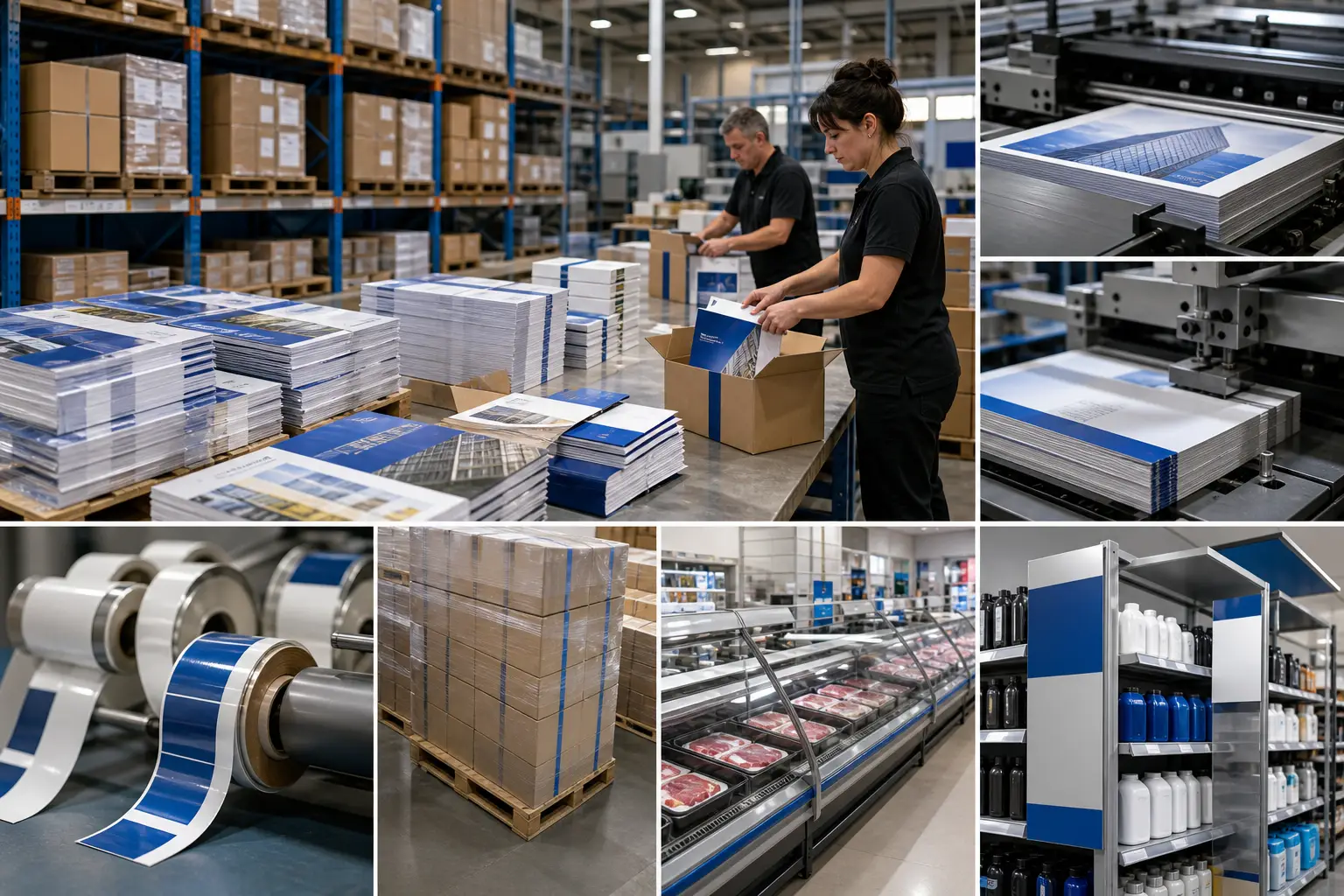
Distribution also affects the finished specification. A mailed publication may need to balance durability with weight. A corporate kit may need printed inserts, folders, and location-specific components assembled together. Integrated kitting and distribution services can help coordinate finished materials for multiple destinations.
A practical specification checklist
Before approving a commercial publication printing project, confirm these decisions with the production team:
- Final trim size, page count, quantity, and release schedule
- Interior and cover paper types, weights, and coatings
- Binding method and inside-margin requirements
- Color expectations, proofs, and repeat-production standards
- Finishing treatments and any areas that need to remain writable
- Versioned content, inserts, personalization, or variable data
- Packaging, mailing, warehousing, kitting, and delivery destinations
Print Group Inc. provides in-house prepress, commercial print production, bindery and finishing, fulfillment, and distribution for organizations managing complex publications and corporate communications. Bring the intended use, distribution plan, and creative files into the conversation early to build a specification that performs from press through delivery.