Construction yard signs help contractors identify active projects, reinforce brand visibility, direct visitors, and communicate site-specific information. For firms managing several jobs at once, the challenge is not simply printing a sign. It is controlling the artwork, materials, quantities, hardware, and delivery plan so each project receives the correct signage when it is needed.
A disciplined sign program makes recurring work easier to manage. It establishes a consistent visual system while allowing controlled changes for project names, services, markets, contact details, or recruiting messages. The result is a more organized field presence across one site or an entire service territory.
What construction yard signs need to accomplish
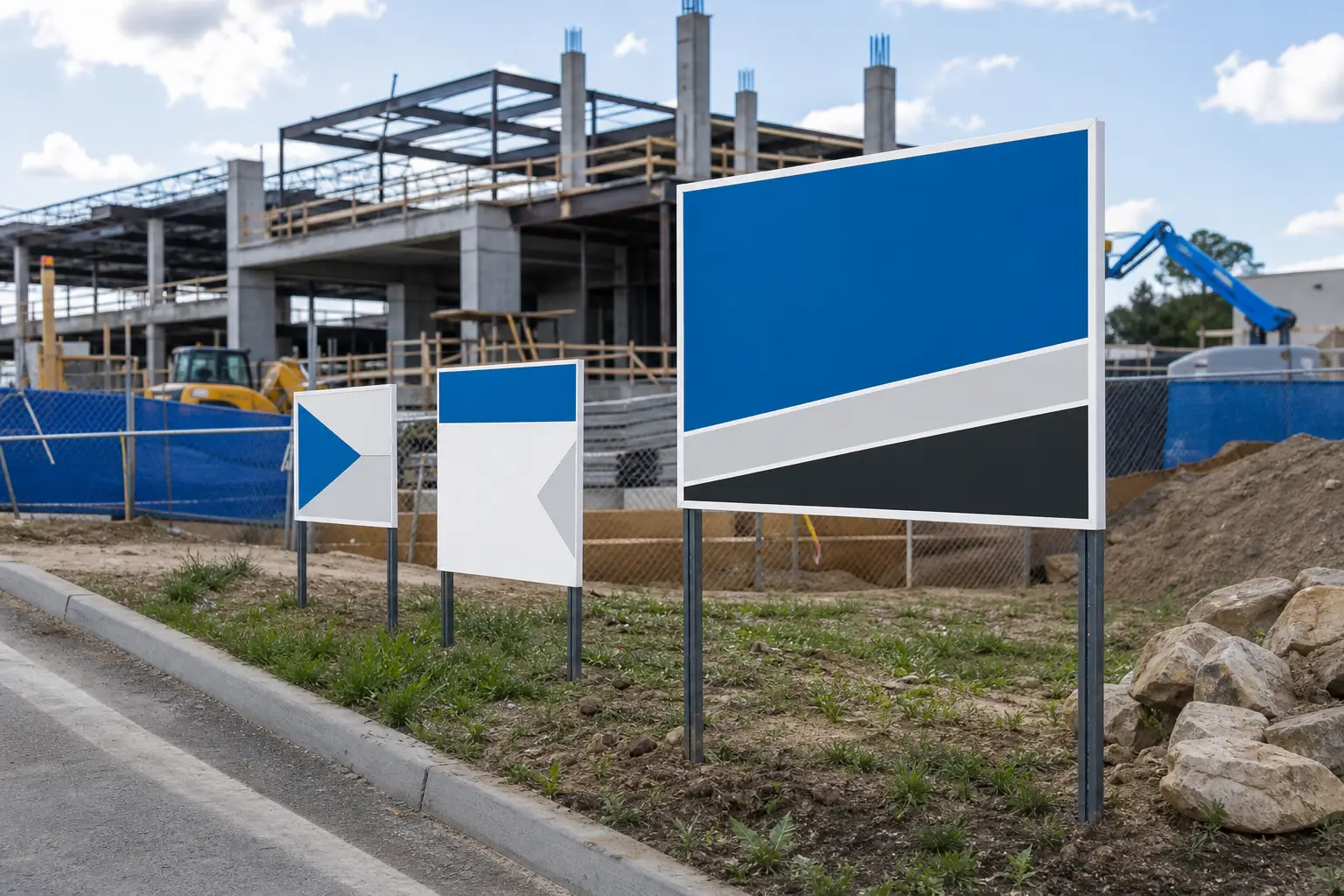
Yard signs often serve more than one purpose during a construction project. A sign near the street may identify the contractor and make the site recognizable to prospective customers. Other signs may help direct deliveries, identify model locations, support leasing or sales activity, or distinguish a project team’s work.
The most effective programs begin by separating those purposes. A brand-identification sign requires clear logo treatment and a readable primary message. A directional sign needs a simple instruction and strong visual hierarchy. A project-specific sign may need variable details that change from site to site.
Trying to place every message on one panel usually reduces readability. Instead, define a small set of sign types with clear jobs:
- Primary project signs for contractor identification and brand visibility.
- Directional signs for entrances, sales centers, deliveries, parking, or visitor routing.
- Service or capability signs that communicate the work being performed.
- Recruiting signs for organizations hiring in a local market.
- Project-specific signs that include a development name, contact route, or other approved variable information.
Before production, confirm the sign’s intended placement, viewing distance, expected duration, and exposure conditions. Those factors influence panel size, material selection, ink coverage, finishing, and the hardware needed for installation.
Construction yard signs: material and format decisions
Material selection should match the sign’s role and expected field conditions. A temporary placement and a long-running project do not necessarily require the same construction. Discuss the site environment, mounting method, handling, and replacement expectations with the print provider before approving a specification.
Sign dimensions also affect practical performance. Larger panels may improve visibility from a roadway, but they require enough open space and suitable support. Smaller signs can work well for close-range directions or repeat placements around a site. The production team should receive the final dimensions, orientation, quantity, and any hardware requirements as early as possible.
Readable design matters as much as the substrate. Prioritize the company name or primary message, then the action a viewer should take. Use sufficient contrast between lettering and background. Keep phone numbers, web addresses, and secondary copy large enough for the actual viewing distance. Fine details that look acceptable on screen may disappear when viewed from a vehicle or from across a jobsite.
For broader site-visibility needs, large and wide format printing can support a coordinated family of visual materials beyond standard yard-sign panels. The key is to specify each application around where and how it will be used, rather than scaling one layout indiscriminately.
Build a repeatable sign system, not a new file for every job
Construction companies often add projects faster than their signage process evolves. Teams may reuse an old file, change copy locally, or submit artwork from multiple offices. That creates avoidable inconsistency in logo usage, color, message hierarchy, and contact information.
A better approach is a controlled master-artwork system. Create approved layouts for each common sign type, then identify which fields can change. For example, the logo, brand colors, and core typography may remain fixed. A project name, market name, service line, QR code, or phone number may be a controlled variable.
Define the production rules before orders begin
- Assign a clear file name and version for every approved template.
- Document the allowed sign sizes, orientations, materials, and finishing options.
- Identify which elements are fixed and which fields may vary by project or territory.
- Set an approval path for artwork changes and reorder requests.
- Keep a current inventory record for standard panels and hardware.
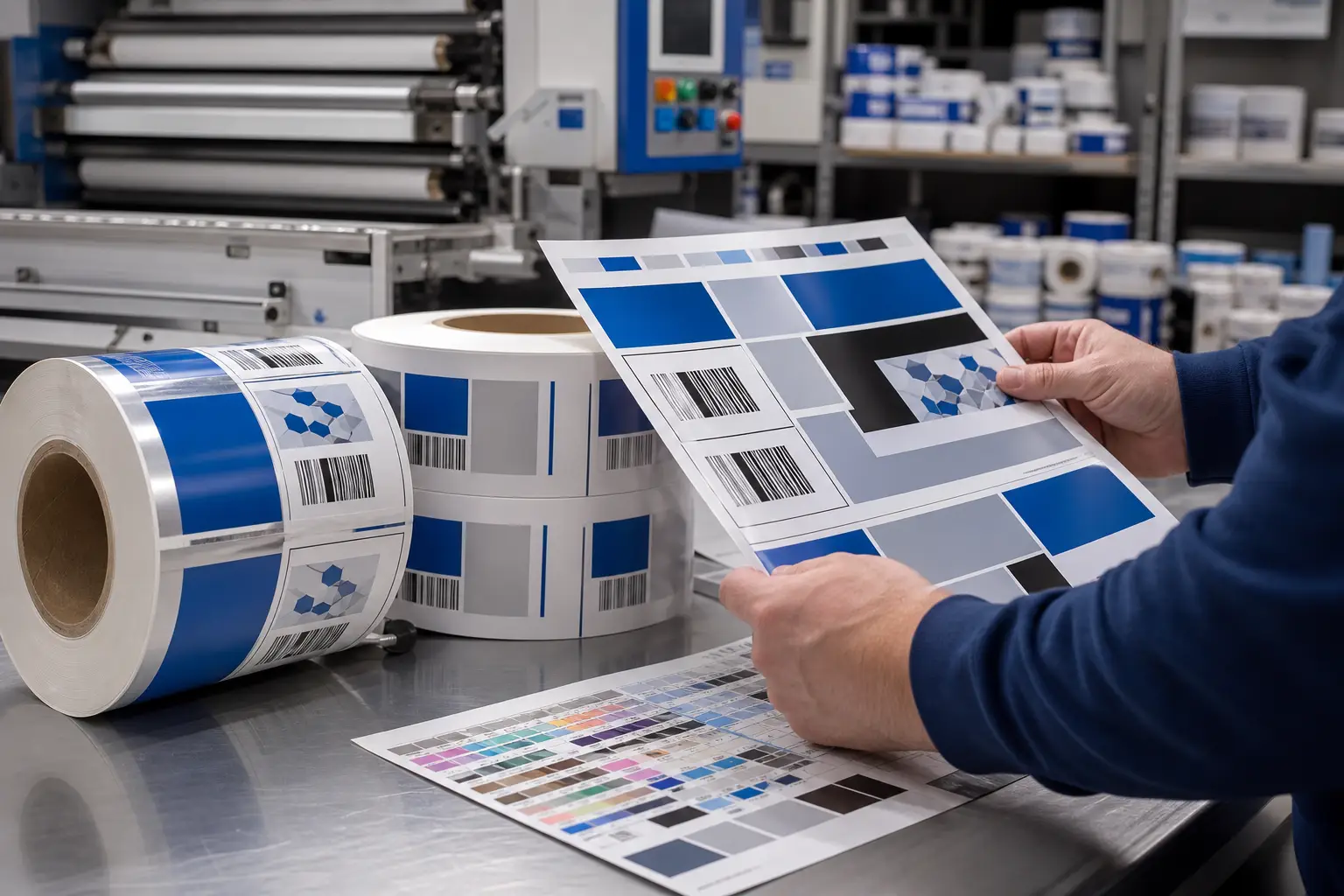
Production-ready artwork reduces surprises later in the process. A print-focused creative review can confirm that the layout, image resolution, bleed, color treatment, and finishing requirements align with the intended output. Print Group Inc.’s creative services are built around production-ready artwork and real-world print conditions.
Manage territory variations without losing brand consistency
A contractor working across cities, regions, or states may need local variations while still presenting one recognizable brand. The right variation depends on the organization’s operating model. A regional office may use different contact information. A residential builder may need community-specific messaging. A specialty contractor may promote different services in different markets.
Version control brings those changes into a controlled production workflow. Rather than treating every variation as a separate design, use a master sign family with defined fields for the information that changes. This approach helps purchasing and marketing teams see what is approved, what is in production, and where each version belongs.
It also prevents an outdated phone number, retired logo, or old service message from reappearing on a reorder. Organizations that routinely produce several approved variations can apply the same planning principles used in versioned campaign printing: retain a consistent core design while controlling targeted differences.
Plan quantities, replenishment, and distribution together
A sign program succeeds in the field only when the right materials arrive at the right job. That makes distribution planning part of print production, not an afterthought. Start with a deployment list that includes each project or office, recipient name, ship-to address, sign version, panel quantity, and required hardware.
For recurring programs, consider standard launch kits. A kit may contain a defined set of primary signs, directional signs, stakes or other specified hardware, and installation instructions supplied by the contractor. Standard kits simplify ordering and make project starts more predictable.
Some organizations also benefit from maintaining inventory for commonly used sign versions. Inventory should be reviewed regularly, especially after a brand update or a change in service territories. Obsolete materials should not remain available for automatic reorder.
When a program involves multiple sign types, multiple job sites, or staged deliveries, coordinated kitting and distribution can organize components by destination. It gives project teams a clearer receiving process and helps central teams manage deployment across a wide footprint.
A practical ordering checklist for construction sign programs
Provide complete specifications before production begins. A concise project brief can prevent rework and speed up review.
- Sign purpose and placement
- Final artwork version and approved copy
- Panel size, orientation, material, and finishing requirements
- Quantity by sign version and destination
- Hardware needs and packing requirements
- Ship-to contacts, addresses, and requested delivery sequence
- Expected project start date and any phased-release schedule
- Reorder process and approval contact
Print Group Inc. provides nationwide commercial print production, including yard signs, prepress, finishing, fulfillment, and multi-location distribution. For a recurring or multi-site construction signage program, request a quote with your sign specifications, quantities, artwork status, and distribution requirements.