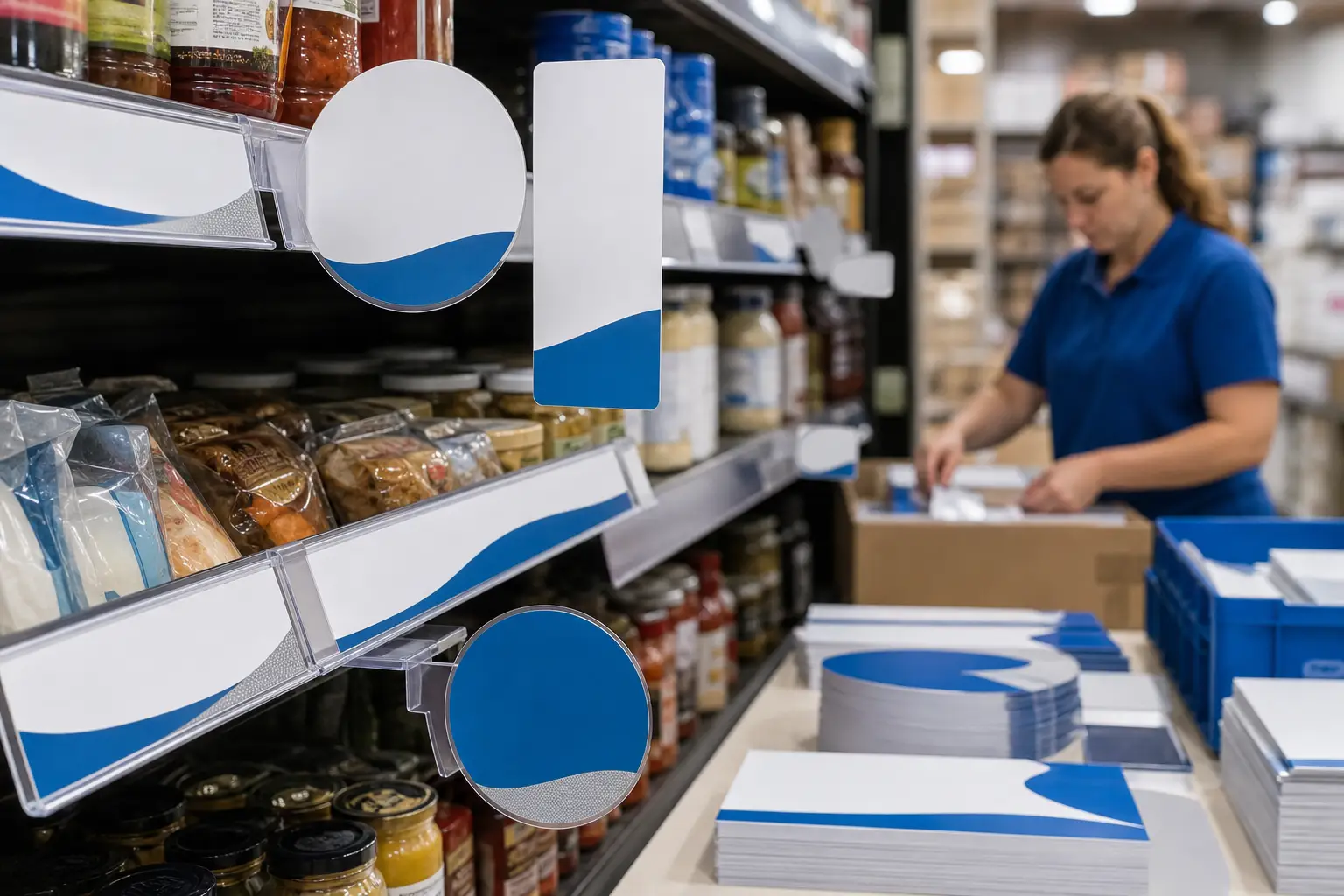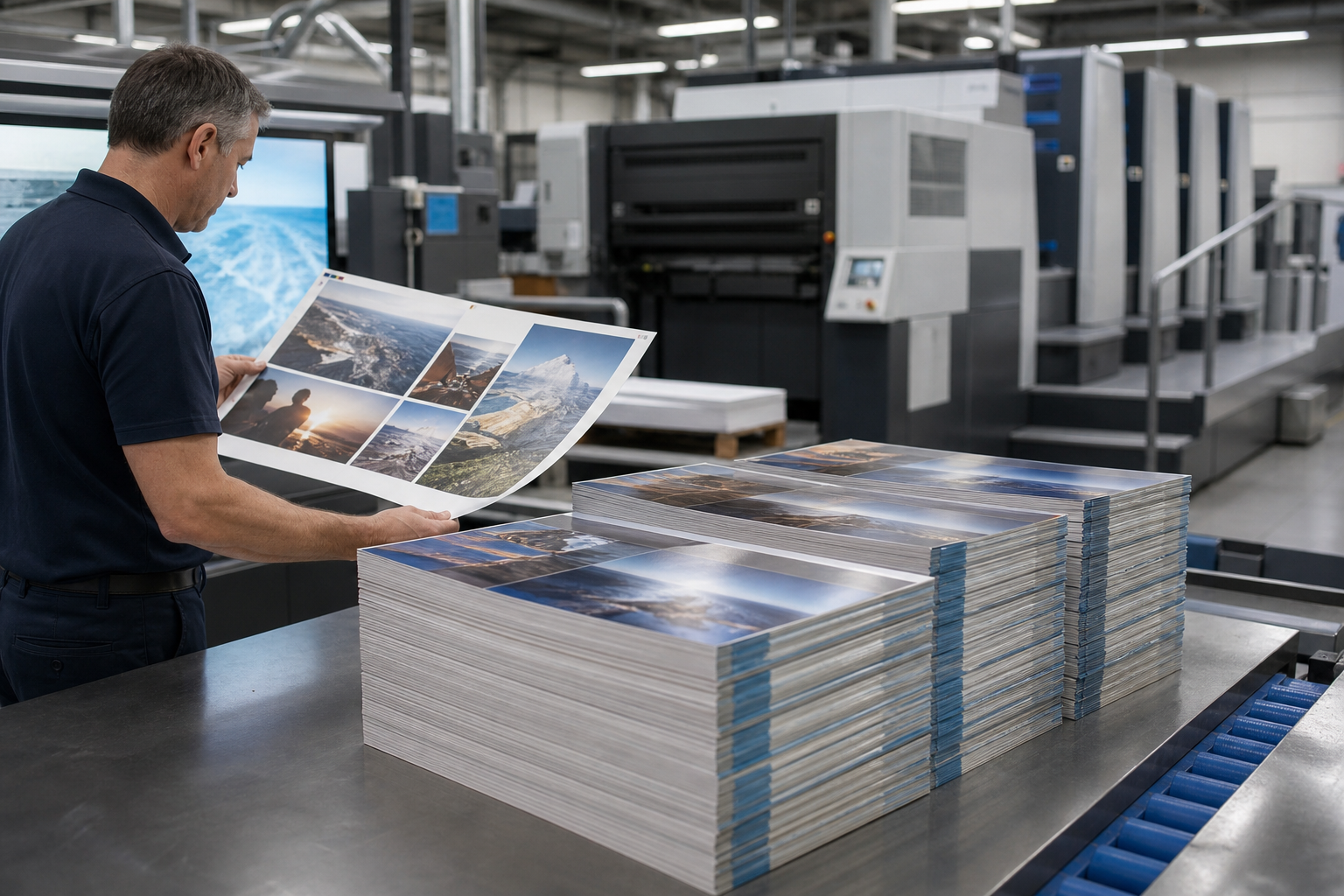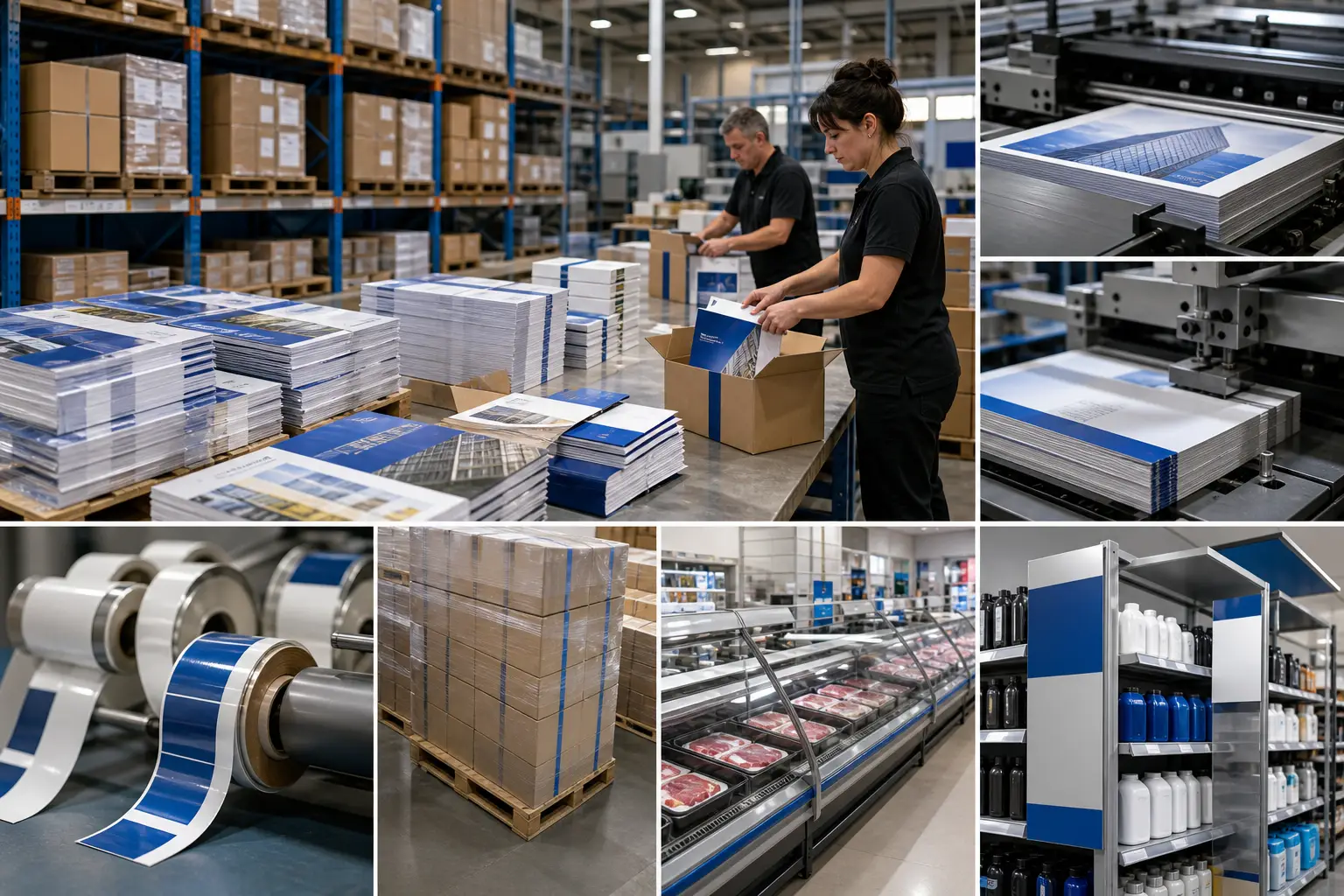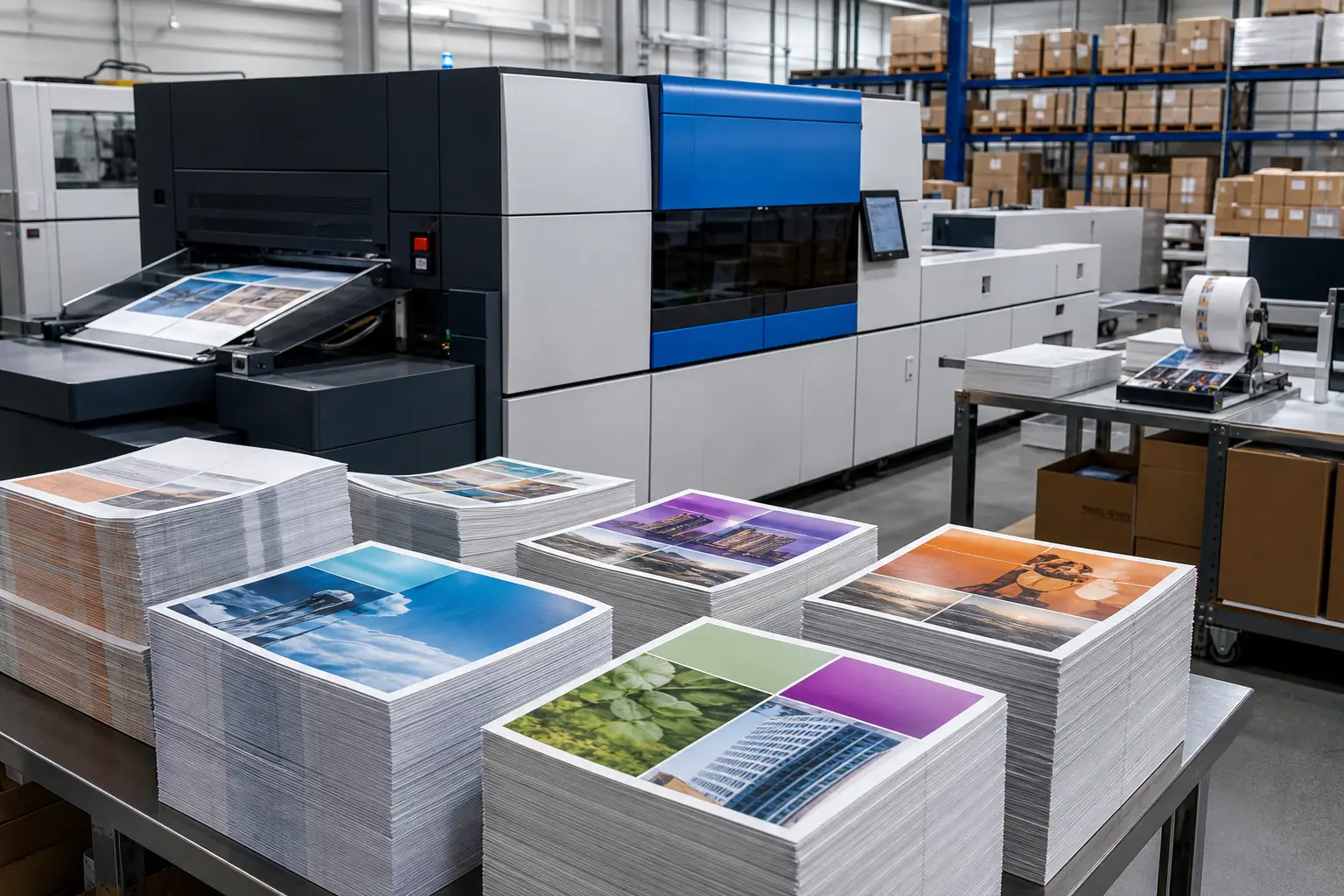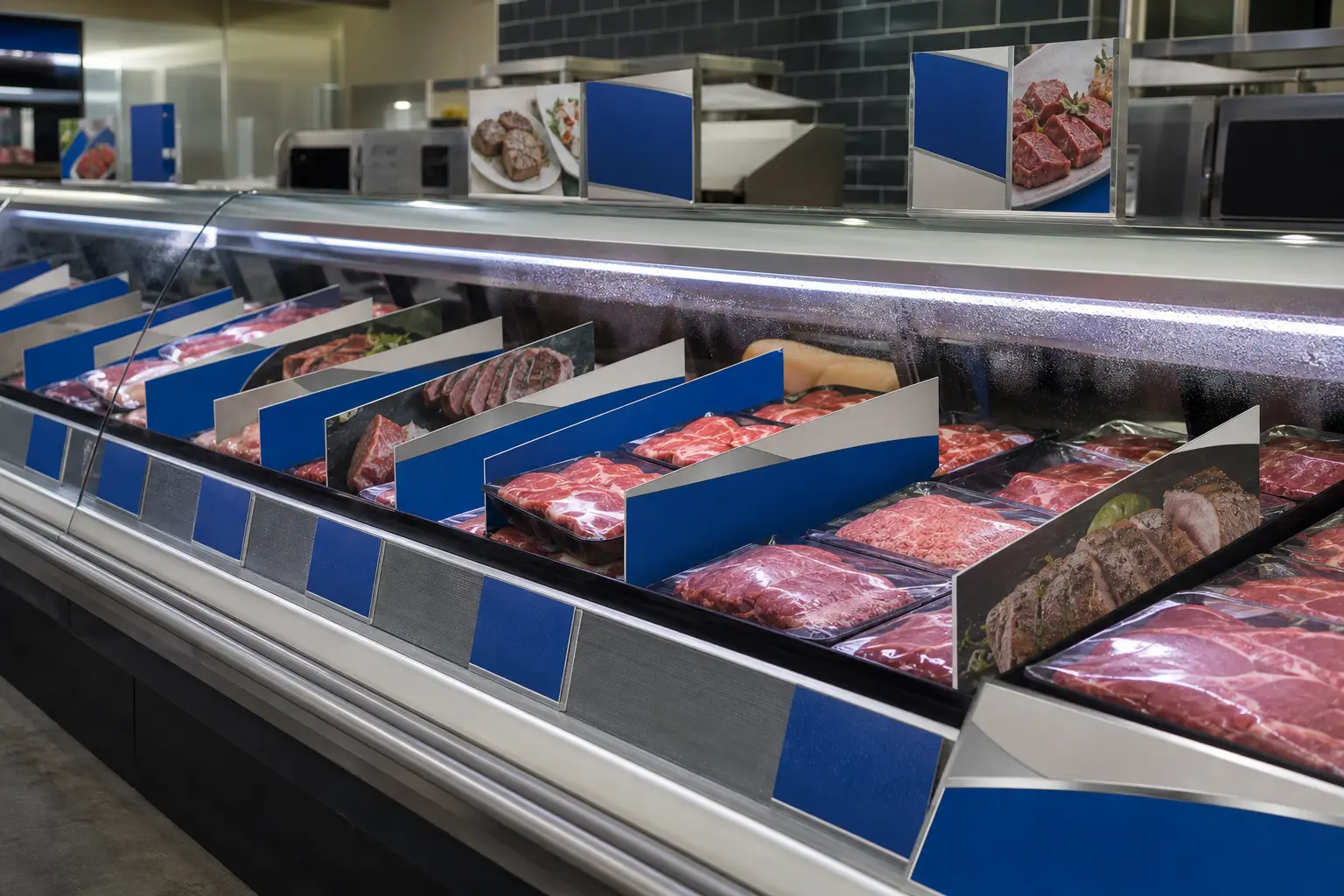
Custom meat case dividers help grocery retailers organize refrigerated displays, separate product categories, and reinforce in-case merchandising. For the divider system to work in daily store operations, it needs more than an appealing graphic. The specification must account for case dimensions, fixture details, moisture exposure, cleaning routines, product movement, and the number of stores receiving the program.
Production planning brings those requirements together before materials are printed, finished, packed, and distributed. That process helps merchandising, procurement, and store operations teams create divider components that fit their intended environment and arrive organized for execution.
Start custom meat case dividers with the display environment
Refrigerated meat cases are demanding retail environments. Airflow, condensation, bright case lighting, frequent product rotation, and routine cleaning can affect how printed materials look and hold up. A divider that fits one case configuration may not fit another, even within the same retail organization.
Before requesting production, document the physical conditions of each intended display. Useful inputs include:
- Interior case width, depth, and usable height
- Divider location and orientation within the display
- Existing rails, channels, clips, or other fixture interfaces
- Obstructions such as lighting, product trays, shelving, or vents
- Whether the component will be moved during replenishment or resets
- Cleaning products and handling conditions the material may encounter
- Whether one system will serve several case models or store formats
Photos, measurements, and fixture samples give the production team a more reliable basis for evaluating format and finishing. When a chain operates different case models, a matrix of store formats can prevent a single artwork file from being treated as a single physical specification.
Retail teams planning a broader in-case program can also review cold case materials for refrigerated retail environments alongside divider requirements. Dividers, signage, shelf components, and other in-case elements should work together rather than compete for limited space.
Specify materials and construction for actual use
Material selection affects rigidity, print appearance, edge performance, and how a divider behaves during handling. The right choice depends on the divider’s size, intended mounting method, expected replacement cycle, and exposure inside the case.
Instead of selecting a substrate by appearance alone, define the operational need. A short-term promotional reset may require a different construction than a recurring department organization system. Likewise, a narrow separator may need different stiffness than a large branded panel.
Questions that guide material selection
- Does the divider need to stand independently, slide into a fixture, hang, or attach to another component?
- How much flex is acceptable during stocking and daily product rotation?
- Will exposed edges be frequently handled or cleaned?
- Does the design require a matte, gloss, or other visual finish?
- Must the piece nest, stack, or ship flat for store installation?
- Will the program use a common base component with replaceable promotional graphics?
Finishing is part of the construction decision. Precise trimming, rounded corners, scored folds, die-cut shapes, or mounting details should be specified early. These details affect both production workflow and how reliably store teams can install the components.
For a detailed view of available divider applications, see Print Group’s custom meat case dividers solution page.
Build artwork around legibility, not just visual impact
Meat department shoppers often make choices quickly while comparing products, cuts, brands, and promotions. Divider graphics should establish separation and recognition without making the case feel crowded. A clear hierarchy generally works better than dense copy.
Designers should consider the shopper’s viewing distance, the divider’s angle, and the amount of product likely to sit beside or in front of it. Large category names, concise promotional language, and controlled color use can support quick recognition. Tiny type, critical messaging near cut edges, and low-contrast designs can lose impact once the divider enters the case.
Production-ready artwork should include the correct finished dimensions, bleed where needed, safe areas, color specifications, dielines, and clear version names. If different departments, brands, seasonal programs, or store groups require distinct messages, establish the naming and approval process before production begins.
Color consistency matters when dividers appear beside printed POS, package labels, or perimeter signage. The goal is not simply to make each component look acceptable on its own. The goal is a coordinated meat department presentation across the full merchandising system. Print Group’s meat department point-of-sale printing capabilities can support related promotional and informational materials.
Plan versions and quantities before files reach production
Many grocery programs require more than one divider design. A retailer may need separate versions by protein category, private-label line, promotion, language, department layout, or store format. Those variations can create avoidable risk when teams rely on informal file names or aggregate quantity totals.
Create a production schedule that identifies every version and its destination. At minimum, it should show the item name, finished size, material, artwork version, quantity, store group, and installation notes. This becomes the working reference for prepress, production, packing, and fulfillment.
A practical approach is to assign each component a unique identifier that appears in the artwork file, approval record, and packing list. Store-specific kits can then contain only the divider sizes and graphics needed for that location. This helps teams avoid sending an incompatible format to a store with a different case configuration.
Use samples and approvals to reduce uncertainty
For a new construction, a physical sample or proofing process can help stakeholders review scale, material behavior, color, trimming, and installation before a wider rollout. The approval should cover the actual components that affect execution, not artwork alone.
Questions to resolve during review include:
- Does each divider fit its designated case and fixture?
- Is important copy visible after product placement?
- Are category colors and brand elements consistent across versions?
- Can store teams identify the correct component and placement?
- Do packing labels make store-level allocation clear?
Coordinate kitting and distribution with the store reset plan
Production is only one part of a multi-store divider program. Components must arrive at the right locations, in the right quantities, with a packing structure that supports installation. A mixed bulk shipment may be suitable for a central distribution model. Direct-to-store kits may be more useful when locations have different layouts or reset dates.
Each kit can be organized by store, department, case type, or campaign phase. Packing labels and installation references should use the same component names as the approved production schedule. That continuity reduces interpretation during a busy department reset.
Kitting and distribution services can help coordinate multi-component retail programs after print production and finishing. Inventory planning also matters for recurring promotions, replacement needs, and phased rollouts.
A production checklist for refrigerated divider programs
Before placing an order for custom meat case dividers, confirm that the project brief includes:
- Case measurements, fixture information, and photos
- Finished sizes and a list of every required version
- Material, finish, cut, and mounting requirements
- Production-ready artwork with defined safe areas and dielines
- Approval contacts and a version-control process
- Quantities by store, case type, or distribution group
- Packing, kitting, and delivery instructions
- Store installation notes where needed
Clear specifications help turn a visual concept into a repeatable retail component. Print Group Inc. supports grocery and retail merchandising programs with prepress, print production, finishing, fulfillment, and nationwide distribution coordination. To discuss a divider program, material requirements, quantities, or store-level kitting, request a customized quote.