Before ordering printed packaging components, define how each piece will be used, where it will travel, what it must communicate, and how it will be applied or packed. Those decisions affect material selection, print method, finishing, quantities, version control, and delivery planning.
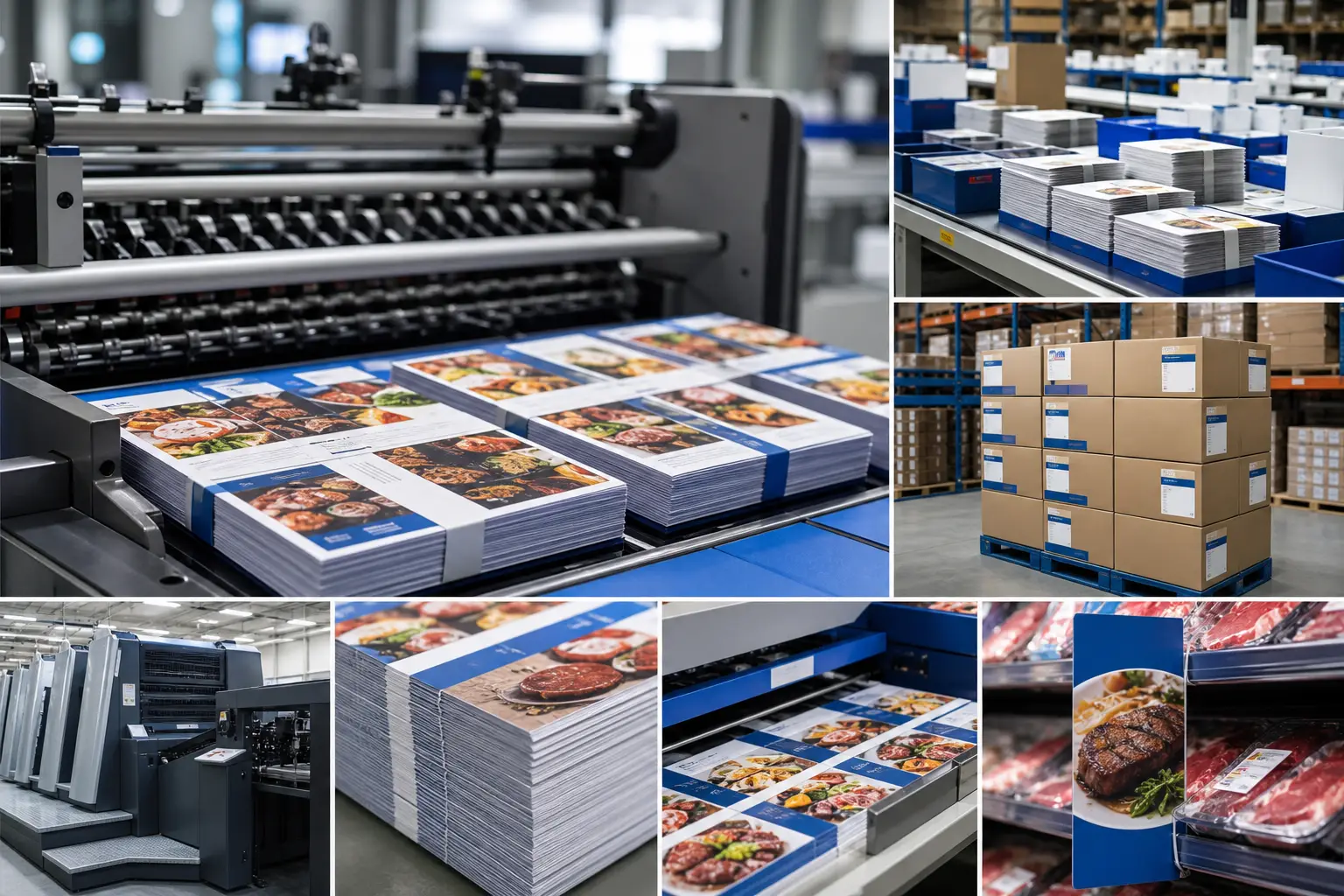
Packaging rarely consists of one printed item. A product program may include labels, header cards, insert cards, wraps, carton labels, promotional pieces, or other printed elements. When these components are specified separately, they can still work as one coordinated system throughout packing, distribution, retail presentation, and replenishment.
Start with the job each printed packaging component must do
Begin with function rather than appearance. A component that identifies a product has different production needs than one that carries instructions, supports a retail display, separates product lines, or helps warehouse teams handle inventory.
For every component, document its primary job and its point of use. Useful questions include:
- Will the piece be applied to a product, inserted into a package, attached to a display, or used on an outer shipper?
- Who handles it: a packing team, automated applicator, retail associate, distributor, or end user?
- What information must remain readable during use?
- Will the component face moisture, refrigeration, abrasion, repeated handling, or outdoor exposure?
- Is the piece customer-facing, operational, or both?
A clear functional brief keeps the project focused on performance. It also helps distinguish a packaging label from an insert, a retail-facing header card, or a distribution label. For a broader view of the formats involved, review printed product packaging components.
Define material and environment before choosing a finish
Material choice should reflect the real conditions the component will encounter. A paper insert inside a dry carton has different needs from a roll label exposed to condensation, cold storage, or frequent handling. Describe the environment before approving stock, adhesive, coating, or lamination.
Provide details about temperature, moisture, friction, handling frequency, storage duration, and the surface receiving the component. If a label must adhere to a particular container or package material, identify that surface early. Application conditions matter as well. A label applied in a cold or damp setting may require a different material and adhesive approach than one applied in a controlled production area.
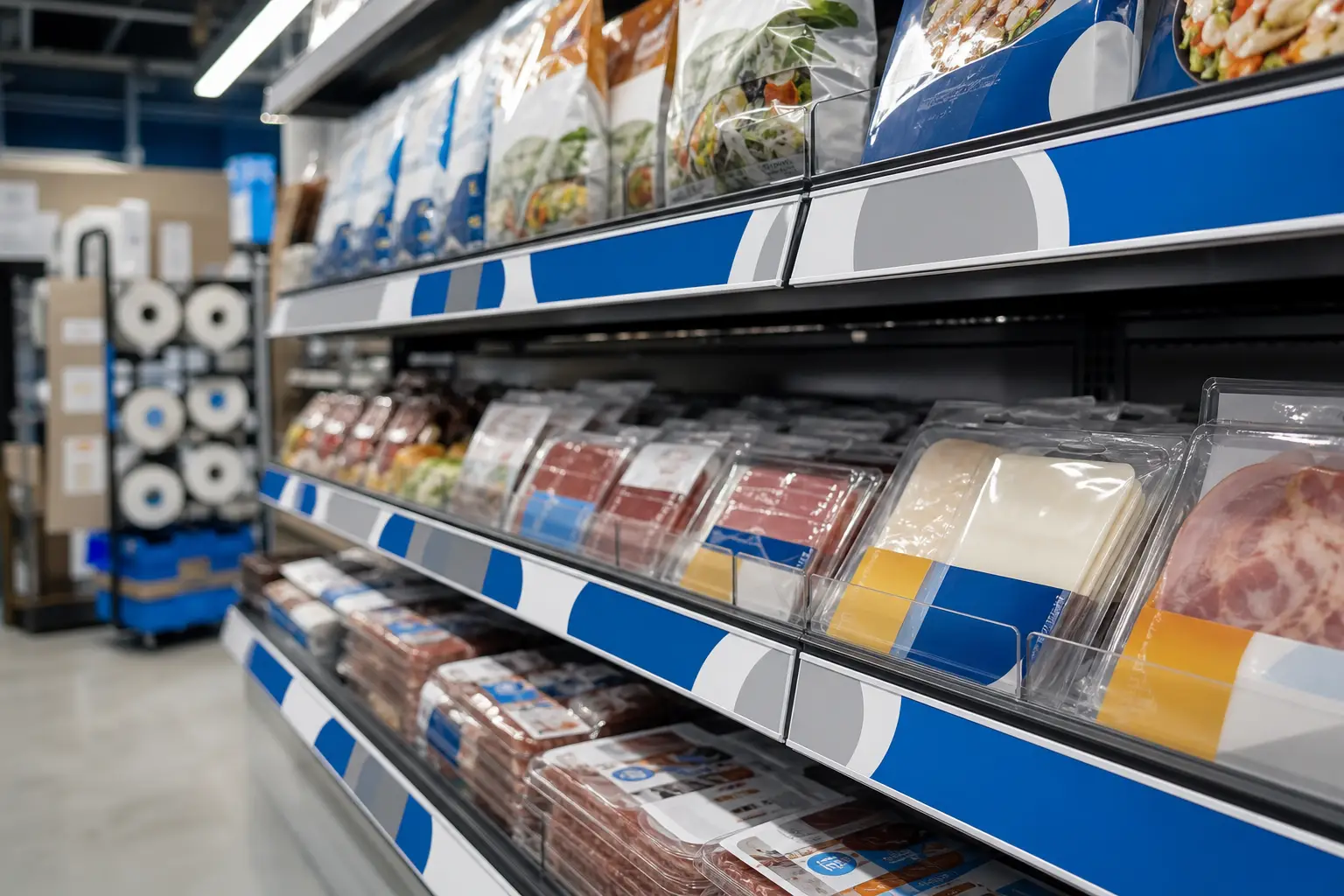
Cold-chain projects require especially detailed planning. Condensation, fluctuating temperatures, and refrigerated handling can affect both adhesion and appearance. Cold storage and freezer label production is a relevant consideration when packaging components will move through refrigerated or frozen environments.
Finish is part of performance, not only presentation. A coating or laminate may support scuff resistance, wipeability, or a particular visual effect. Die cuts, perforations, folds, score lines, and holes also need to match how the item will be assembled or used. Define these requirements in the specification instead of treating them as a final-stage detail.
Prepare production-ready artwork and content controls
Artwork must account for the physical component, not just the design on screen. Supply final dimensions, dielines where applicable, bleed, safe areas, fold locations, orientation, and finishing instructions. Small pieces can be particularly sensitive to trim movement and tight copy placement.
In addition, identify the elements that cannot change. These may include brand colors, product names, item codes, version identifiers, variable fields, or required internal approvals. Keep a single current source for approved artwork and copy. That practice reduces the risk of outdated files entering a repeat order or a multi-location rollout.
Plan color expectations realistically
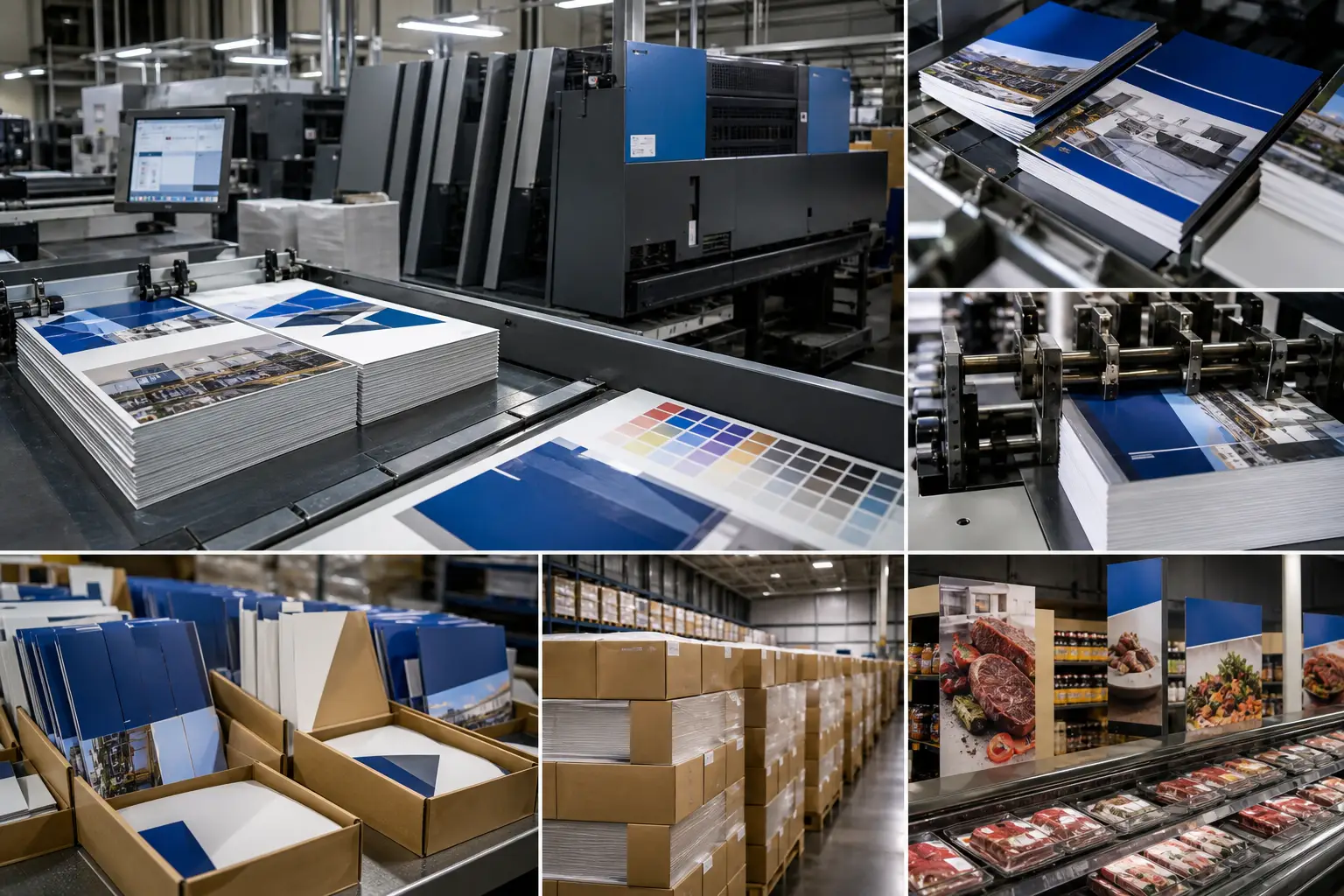
If color consistency matters across labels, inserts, cartons, signage, or other campaign materials, state the intended match and the reference being used. Different substrates, inks, coatings, and print processes can influence the final appearance. Discuss critical colors during prepress, particularly when a packaging program includes components produced in different formats.
Production-ready artwork should also account for readable type at final size. Very small text, fine reverse type, narrow rules, and dense graphics may reproduce differently depending on the material and print process. A prepress review can identify concerns before production begins.
Specify quantities, versions, and reorder logic
A total quantity is only one part of the order. Define how that quantity breaks down by SKU, flavor, size, region, language, retailer, promotion, or distribution point. Record the version name, quantity, artwork file, and packing requirement for each variation.
Version planning matters when several components share a design system but contain different product information. A structured matrix helps purchasing and marketing teams verify that every version has the correct copy, color treatment, quantity, and destination.
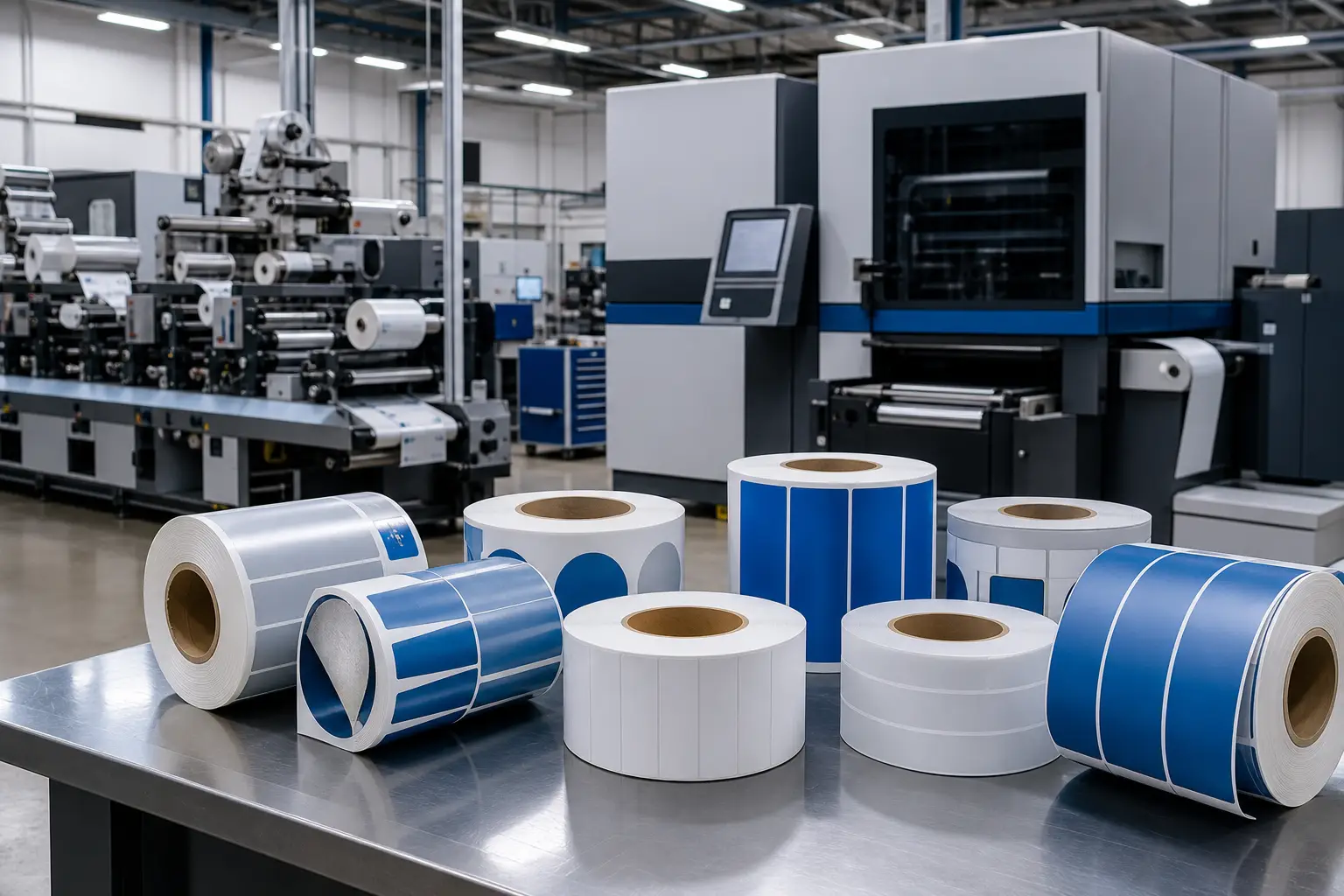
Choose the production approach based on run length, number of versions, material needs, and change frequency. Digital production can support shorter runs and versioned work, while flexographic production is commonly used for higher-volume label programs. Learn more about flexographic label printing for high-volume programs when planning recurring roll-label requirements.
Also decide how reorders will work. Establish whether inventory will be held, which files are locked for repeat production, who can authorize changes, and what minimum stock level should prompt a reorder review. These choices support repeatability and reduce last-minute changes.
Define packing, kitting, and delivery requirements
Packaging components still need to arrive in a usable condition. State how rolls, stacks, or individual pieces should be packed; how many belong in each carton; whether versions must remain separated; and what identifying labels are needed on shipping cartons.
For multi-location programs, build the delivery plan into the order. A store, co-packer, warehouse, or regional distribution center may need a different assortment of components. A location-level packing list can help ensure each destination receives the right materials in the right counts.
When a project combines labels, inserts, signage, or other collateral, kitting may reduce work at the destination. Kitting and multi-location distribution services can help coordinate assembled materials and delivery across multiple locations.
Use a complete ordering checklist
Before releasing printed packaging components to production, confirm that the order includes the following:
- Component name, purpose, and product or SKU association
- Final size, shape, orientation, and dieline or structural reference
- Material, adhesive needs where applicable, and environmental conditions
- Print colors, color references, and any critical brand-color requirements
- Artwork files, copy approval status, and version-control naming
- Finishing details, including coating, lamination, die cutting, folding, scoring, or perforation
- Quantity by version, pack size, and expected reorder requirements
- Application method, if the component will run on packing or labeling equipment
- Carton labeling, kitting, delivery locations, and requested delivery schedule
- Named contacts for artwork approval, production questions, and receiving
A detailed specification gives the production team the information needed to evaluate materials, prepare files, plan the run, and coordinate finishing and distribution. Print Group Inc. supports nationwide label, packaging, commercial print, and fulfillment programs for organizations that need consistent execution across recurring or multi-location work.